“I, the LORD, will teach your children, and they will have real peace.” (ISA 54:13 ERV)
Isa 54:13, ERV
I could probably just stop here and call this my message.
“The Lord Will Teach Your Children”
I recall anxiously wondering what my children were up to when the days came that they could be out of my sight,and able to decide what they were doing and where they were. being a Christian parent, I added to that stress worrying about this standard or that standard that they might be abandoning. And what kind of trouble was it leading to? Late night calls from friends and hearing police in the back ground arresting one of my children. Standing by the bedside of one of my children in the hospital emergency department. He tried to commit suicide. He had over dosed on Cocaine and a few other things. Doctors were worried his heart would stop. I kept telling him I loved him. I wasn’t mad at him. I just wanted him to fight this so we could try again to do things better.
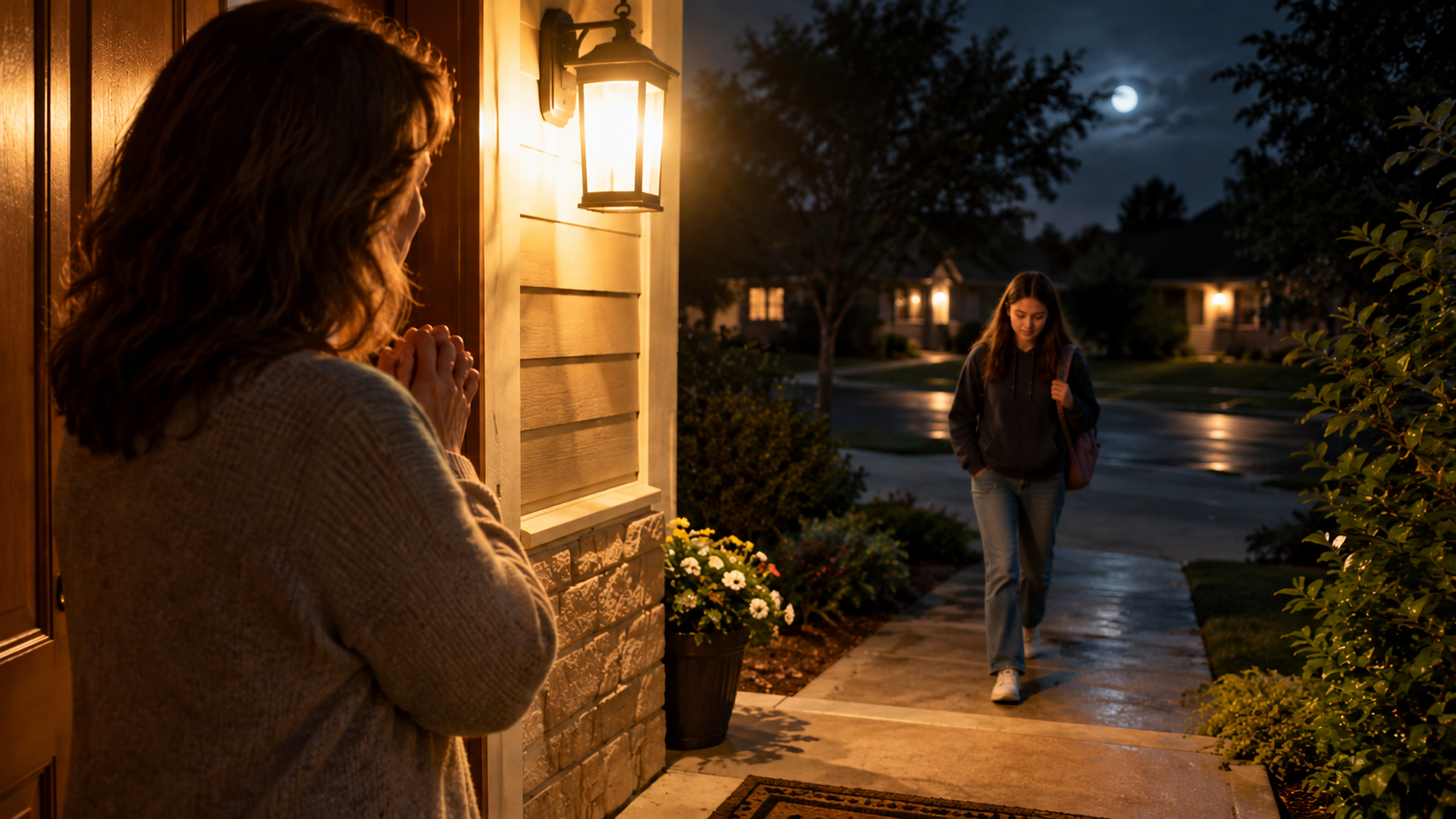
When I got home that night, I turned on the outside light at the door they would normally enter whenever they did come home. If they came home. I remember saying to God:
“Father, I am leaving the light on for them. Please let them be OK and come home. Even if just for a visit.”
The rest of this message talks a bit about what I meant by
“leaving the light on.”
We are talking about something for them to depend upon. Something to count on. Some day.
Parents of teenagers can easily become discouraged when conversations turn into arguments, values are questioned, and the children they once guided so closely seem to be pulling away. Isaiah 54:13 offers a promise that reaches beyond a parent’s abilities:
“I, the LORD, will teach your children, and they will have real peace.”
For a parent struggling with a teenager, Isaiah 54:13 offers both a responsibility and a relief:
“I, the LORD, will teach your children, and they will have real peace.”
God is not asking parents to stop teaching, praying for, encouraging, or lovingly influencing their children in spiritual matters. Or, anything else. In fact, these are sacred duties entrusted to all parents. But there comes a point when every parent discovers the limits of their human influence. A mother or father can present truth, but they cannot make a child believe it. They can point the way to Christ, but they cannot force a heart to follow Him.
The hardest lesson for parents is learning to surrender the outcome to God. When I left the light on at the back door that night, that was my way of finally saying to Jesus
“please take over Lord. Guide and direct and keep them safe.”
The real question for me then was:
“Whom will I trust more? My own ability to manage and control, or God’s ability to teach and lead my child?”
When parents faithfully do their part and then place their children into God’s hands, they can find peace in knowing that the One who understands every struggle, temptation, and hidden burden of their child’s heart has promised to be their Teacher. Any weakness or failure on the part of the parent/s doesn’t matter once Jesus takes over. The God who calls parents to influence their children is the same God who asks them to trust Him with what only He can do.
Like that night when I left the light on, maybe parents today could rededicate their children to God once they get older and have a mind of their own? Many churches or parents have some kind of dedication for their baby/infant children. A baby dedication is fundamentally an act of parental surrender. The parents acknowledge that the child ultimately belongs to God and that they need His wisdom and grace in raising that child.
The irony is that this surrender is often easier when the child is an infant, because the future challenges are still largely unknown. The teenage years can expose whether that dedication was merely ceremonial or whether it reflected a continuing reality of the parents trusting God with the raising and nurturing of their children. In this respect, there may be great value in parents having a renewed dedication of some kind. Not necessarily in a public church service, but in a private and deliberate act before God. Just between the parent and God at home. In private. They could consciously place their teenager into God’s hands again, acknowledging both their ongoing responsibility to influence and their inability to control. And there would be nothing wrong with daily dedicating our children to God. Acknowledging to Creator who is really in charge. This pattern is seen throughout the Bible.
Hannah first dedicated Samuel to the Lord before he was born (1 Samuel 1:11), but she then had to continue surrendering him year after year as she watched God lead his life.
Abraham’s experience on Mount Moriah was also a form of renewed dedication. God was not asking Abraham to stop being a father; He was asking Abraham to release his claim of ownership and trust God’s purposes for Isaac.
There is a powerful connection here to the promise of Isaiah 54:13:
“All thy children shall be taught of the LORD; and great shall be the peace of thy children.”
The verse focuses on the children receiving peace through being TAUGHT BY GOD. And praise God! Any parent who truly believes that promise in Isa 54:13 will often receive that same peace as well. The Bible says we reap what we sow. The parent will receive that same peace, not because every problem immediately disappears, but because the burden shifts from “I must make this work” to “God is teaching my child. I can trust God better and bigger than me, to teach my loved one.”
The parent’s peace grows in proportion to their trust in God’s ability to do what they cannot. Perhaps a simple prayer of dedication for a parent of teenagers might be:
“Creator God, this child ______ is Yours before he/she is mine. I will continue to love, teach, pray, counsel, and set an example, of a loving and lovable parent; but now I surrender my need to control the outcome. Fulfill Your promise to teach my child. Open his/her heart to Your voice, lead him in Your paths, and give him/her the peace that comes from knowing You. (John 14:27). Please, give me peace as I trust You to do what I cannot.”
Such a prayer does not end parental involvement; it redefines it. The parent remains faithful in influence while entrusting the transformation of the heart to God. That may be one of the deepest lessons hidden within Isaiah 54:13. For both the child and the parent to become students in the school of Christ.
One Christian writer sums it up like this:
“God will work with power when in trustful dependence upon Him parents will awake to the sacred responsibility resting upon them…” (Adventist Home 206)
“Let us make a solemn consecration of ourselves and our children to God. They are the property of God, and they are to be trained for His service.” (MS vol. 25, p. 62 (MR No. 1798)
Now is the time for parents to just “leave the light on.”
In a world where many parents carry heavy burdens for wandering, struggling, or distant children, the call is simple. Keep the light on. Not merely in the parent’s heart. But in a way the child knows it is there. Let them know that no matter how far they wander, they are loved, prayed for, and welcome to come home. Welcome in your heart and in your life. They need to trust that there is always something there for them that they can trust. Let them know that the door remains open, that forgiveness is available. Treat them like royalty. Parents, show by your actions that there is always a place for them in the family and before God.
The light that is left on for our children through the darkest night may become a quiet testimony of hope. Something that everyone will look back on with joy. Knowing God was there all the time. Just like He was with His own Son, even when Jesus died on the cross.
The light you leave on for your children can be an assurance that when they are ready to return, they will not be met with rejection, but with grace. Just as our heavenly Father continually leaves the light on for His children, (through His promises) parents can reflect His heart by maintaining a steady, visible witness of love, faith, and welcome until the day their child chooses to come home.
Perhaps your children are still at home. The light can still be left on for them too. Leaving the light on is more than an act of waiting; it is a symbol of unwavering faith, love, and hope. It reflects the heart of God, who never ceases to extend His promises and invitation to His children, no matter how dark their path may become.
For parents of wandering children, the light they leave on represents the assurance that home, forgiveness, and acceptance remain available when they are ready to return.
And this principle is not limited to children who have left home. Children who are still under a parent’s roof also need the light left on for them. A consistent example of prayer, godly character, encouragement, and trust in God’s promises. Whether near or far, every child benefits from knowing there is a place where faith is lived, love is constant, and the way back to God is always illuminated.
All parents can be rest assured that God will teach their children.
If we parents leave the light on, they will see it.
Related Posts:
It’s Not on The Agenda! December 22, 2024 There was a man from Cyrene named Simon walking into…