The Resurrection and Our Hope of Eternal Life

Reading Time: 7 minutes

Jesus said to her, I am the Resurrection and the Life! He who believes in Me, though he die, yet he shall live.  (John 11:25)

John 11:25
John 11:25

Yesterday, on the Sabbath, we had a brief discussion on “Abiding In Christ,” and how that pertains to God’s law NOT being done away with on the cross. Unfortunately, there is another reason that many believers say the law has been done away with. This reason is more specific in trying to say the seventh-day Sabbath is “no longer applicable” because the law was done away with on the cross. Many people make the erroneous claim that “SUNDAY” is a memorial to the RESURRECTION. (still meaning that the Bible Sabbath is not needed) But is this what the Bible says? The answer is a resounding NO!

So what is the memorial of the resurrection for Christians? Baptism by immersion, and the Lord’s supper are the only things in Scripture that are to serve as a memorial of Christ’s death and resurrection. (Rom 6:4, Col 2:12, 1 Cor 11:23-30). No where is Sunday named in Scripture as a memorial to anything, especially of the resurrection.

Why Is The Resurrection So Important?

And if Christ has not been raised, your faith is futile; you are still in your sins. Then those also who have fallen asleep in Christ are lost.” (1 Cor 15:17-18, NIV)

Resurrection Power Today

Today is “Easter Sunday.” This message will reflect on one of the most central truths of our Christian faith—the resurrection of the dead. As we look at 1 Corinthians 15, among other places, Paul offers us not just a doctrine, but a living hope that transforms our lives, our understanding of death, and our future with Christ. This passage reminds us that the resurrection is the cornerstone of our faith, the guarantee of our salvation, and the very reason we have hope in the face of death.

The Resurrection as the Foundation of Our Faith

Let us begin by turning to 1 Corinthians 15:14. Paul writes

“If Christ has not been raised, our preaching is useless and so is your faith.”

This verse tells us something crucial: without the resurrection, everything we believe, everything we teach, and everything we hope for would be in vain. The resurrection is the very foundation of our Christian faith. If Christ had not risen from the dead, then our faith would lack substance and hope. The victory over death that Jesus achieved when He rose from the grave is what validates our faith. It proves that Christ is the Son of God, that He has power over sin, and that He has secured eternal life for us.

Jesus as the Firstfruits of the Resurrection

In 1 Corinthians 15:20, Paul states, “But Christ has indeed been raised from the dead, the firstfruits of those who have fallen asleep.”

Here, Paul calls Jesus the “firstfruits” of those who have died, a term that signifies that Jesus is the first to be raised to eternal life, and His resurrection guarantees that others will follow. This is not just a future hope, but a reality that shapes our present lives. Just as the firstfruits of a harvest give us the assurance that more fruit will come, so too does Christ’s resurrection assure us that all who belong to Him will also be raised. We, too, will be resurrected, the same way as Christ was. Jesus did not go to Heaven as soon as he died and so it follows, from the Bible that neither will we. His experience is to be our’s. (see Rom 5:18-19, and many others)

Victory Over Death

In 1 Corinthians 15:26, Paul writes, “The last enemy to be destroyed is death.” Obviously, death would be “destroyed” as soon as the believer goes to Heaven, so if we did go to Heaven as soon as we die, then death would be the first enemy to be destroyed, not the last. The timing of all this is important.

Death is often seen as the final and inescapable reality, yet the resurrection teaches us that death is not the end. Jesus’ victory over the grave is a decisive blow to the power of death. In Christ’s resurrection, we see the first fruit of victory, a victory that will be fully realized when He returns. This is why the resurrection is so important—it assures us that death no longer has the last word. Death has been defeated through Christ, and one day, when He returns, death will be completely destroyed.

The Transformation of Our Bodies

In 1 Corinthians 15:42-44, Paul writes, “So will it be with the resurrection of the dead. The body that is sown is perishable, it is raised imperishable; it is sown in dishonor, it is raised in glory; it is sown in weakness, it is raised in power; it is sown a natural body, it is raised a spiritual body.”

Here, Paul gives us a vision of the resurrection that is both comforting and transformative. He tells us that our mortal, weak, and perishable bodies will be changed—transformed into bodies that are imperishable, glorious, and powerful. This transformation is not just symbolic; it is real. Our physical bodies, though subject to decay and death, will be raised in a glorified state, perfectly suited for eternal life with God. The resurrection is not merely about the continuation of life; it is about the complete restoration of what God intended for us. It is the ultimate fulfillment of His promise that we would experience the fullness of life, body and soul.

The Timing of the Resurrection

In 1 Corinthians 15:22-23, Paul writes, “For as in Adam all die, so in Christ all will be made alive. But each in turn: Christ, the firstfruits; then, when he comes, those who belong to him.”

This passage clearly teaches that the resurrection of the righteous will occur at the second coming of Christ. Paul teaches us that there is a future resurrection that will involve both the dead and the living. When Jesus returns, those who have died in Christ will be raised, and those who are still alive will be transformed. The resurrection is not something that happens immediately after death, it didn’t even happen that way with Jesus. Jesus did not go to Heaven as soon as He died. His experience is to be ours. Christ came to this world to show us what God can do and what we can do in cooperation with God. In human flesh He went into the wilderness to be tempted by the enemy. He knows what it is to hunger and thirst. He knows the weakness and the infirmities of the flesh. He was tempted in all points like as we are tempted.

The resurrection will take place at the return of Christ. No resurrection would be needed if we are already in Heaven. This truth gives us hope and comfort in the face of death, that non-believers do not have; just knowing that our loved ones who have passed away in Christ will be resurrected at the glorious appearing of our Savior, and that we will “rise together” to meet our Lord.

Our Resurrection

But I would not have you ignorant, brothers, concerning those who are asleep, that you be not grieved, even as others who have no hope. For if we believe that Jesus died and rose again, even so God will also bring with Him all those who have fallen asleep through Jesus. For we say this to you by the Word of the Lord, that we who are alive and remain until the coming of the Lord shall not go before those who are asleep. For the Lord Himself shall descend from Heaven with a shout, with the voice of the archangel and with the trumpet of God. And the dead in Christ shall rise first. Then we who are alive and remain shall be caught up together with them in the clouds, to meet the Lord in the air. And so we shall ever be with the Lord. Therefore comfort one another with these words. (1 Thes 4:13-18)

The Defeat of Death Signalled Through Christ’s Resurrection

In 1 Corinthians 15:54-57, Paul writes, “When the perishable has been clothed with the imperishable, and the mortal with immortality, then the saying that is written will come true: ‘Death has been swallowed up in victory.’ Where, O death, is your sting?’”

Paul here quotes from the Old Testament, emphasizing that the resurrection of the dead will culminate in the complete defeat of death. Through Christ’s resurrection, death has lost its sting; it no longer has power over us. This victory is not just a future promise but a present reality for the believer. Because of Christ’s resurrection, we can face death without fear, knowing that it is temporary and that our ultimate victory has already been secured in Christ.

“For this cause also thank we God without ceasing, because, when ye received the word of God which ye heard of us, ye received it not as the word of men, but as it is in truth, the word of God, which effectually worketh also in you that believe.” “What is our hope, or joy, or crown of rejoicing? Are you not in the presence of our Lord Jesus Christ AT HIS COMING? For you are our glory and joy.” {AA 257.2}

How “Easter” Shows Us What Love Is

What is love?

It’s one of the deepest questions of the human experience. And the world’s answers can be confusing. Is it a feeling? An obligation? How much is enough? With so many opinions, where do we find the truth about love?

1 John 3:16 gives us a clear answer: “This is how we know what love is: Jesus Christ laid down his life for us.” This verse doesn’t just define real love, it gives us the ultimate example of it: Love is sacrifice. And God showed the full expression of that love when Jesus died on the cross to atone for our sins.

Easter Saturday adds weight to this truth. It’s a day that sits in the quiet between Good Friday and Resurrection Sunday. On this day, the tomb was still sealed. There was no celebration yet. Just silence, waiting, and the cost of the cross still hanging in the air.

This gave the disciples time to sit in the reality of what had happened. It wasn’t a close call. It wasn’t an almost-sacrifice. Jesus truly died. He truly gave everything. And this emphasizes a powerful truth: Love costs something. Love is sacrifice.

Then John turns the spotlight onto us: “And we ought to lay down our lives for our brothers and sisters.” Most of us won’t be asked to die for someone. But we all face everyday moments where choosing to love like Jesus could cost us something. Showing up for someone in crisis when you’re already stretched. Covering someone’s need when it hits your budget. Sharing Jesus when it could cost you your comfort or reputation.

This is the truth of God’s love for us: Christ poured Himself out for us first, and from that love, we’re moved to love others the same way. And when you love like that, people don’t just hear about God’s love, they experience it for themselves.

Drawn by His Everlasting Love

Reading Time: 8 minutes

“I have loved you with an everlasting love; therefore I have drawn you with loving kindness.” Jeremiah 31:3

Jer 31:3
Jer 31:3

The Lord of life and glory took on human nature to show us that, through Christ, God is reaching out to bring us into a close relationship with Himself. Without this connection, true happiness is impossible. Humanity, fallen and broken, must come to understand that our Heavenly Father is not content until His love embraces the repentant sinner, changed through the sacrifice of the sinless Lamb of God.

All of heaven is working toward this purpose. Under divine authority, heavenly beings labor to restore those who have separated themselves from their Father through sin. A plan has been set in motion to reveal the amazing grace and love of Christ to the world. The immeasurable price paid by the Son of God to redeem humanity shows the depth of God’s love. This plan of redemption is sufficient to save everyone. Through the forgiveness of sins and the righteousness given by Christ, fallen people can be made whole in Him.

In everything Jesus did, He revealed the tender, caring nature of God as a loving Father. He wants us to understand the Father’s love and draws us to Him by showing that love in action. Jesus lived among people so they could clearly see God’s mercy, compassion, and kindness. It was through His life of goodness that the character and grace of God were made visible.

Christ came to reveal God’s love to the world and to draw every heart to Himself. The first step toward salvation is responding to that loving invitation. As people open their hearts to His grace, He leads them step by step into a deeper knowledge of Him, bringing the joy of forgiveness and the peace of God. This growing relationship with Christ is the essence of eternal life.

Jesus also spoke of this drawing power when He said, “No one can come to Me unless the Father who sent Me draws them, and I will raise them up at the last day” (John 6:44). This shows that the love described in Jeremiah is still at work through Christ. God gently draws people to Himself, not by force, but through love, truth, and grace. Those who respond to this call discover that His love has been reaching for them all along, guiding them into a restored and lasting relationship with Him. In Jesus’ own words:

“…when I am lifted up from the earth, will draw all people to myself.” (John 12:32)

“The heart of God yearns over His earthly children with a love stronger than death. In giving up His Son, He has poured out to us all heaven in one gift.” (SC 21)

“The sinner is drawn to Christ by the manifestation of His love. ‘I, if I be lifted up from the earth,’ He says, ‘will draw all men unto Me.’ Christ must be revealed to the sinner as the Savior dying for the sins of the world; and as we behold the Lamb of God upon the cross of Calvary, the mystery of redemption begins to unfold to our minds and the goodness of God leads us to repentance.” (SC 26)

“Christ is the bread of life. Those who eat His flesh and drink His blood live by Him, even as He lives by the Father.” (DA 389)

“To eat the flesh and drink the blood of Christ is to receive Him as a personal Savior, believing that He forgives our sins, and that we are complete in Him. By beholding His love, by dwelling upon it, by drinking it in, we are to become partakers of His nature.” (DA 389)

Being partakers of His divine nature is one of the most important experiences to be had in the Christian life. One text in particular speaks to us even today about how to partake of the divine nature.

“…he has granted to us his precious and very great promises, so that through them you may become partakers of the divine nature, having escaped from the corruption that is in the world because of sinful desire.” (2 Pet 1:4)

2 Pet 1:3 tells us that God gives us everything we need to live a life of Godliness, through His promises. No. This does not mean that we become “little Gods” or that we become God, or any such thing.

God gives us power. (John 1:12). That power comes through knowing Him. (John 17:3) We may come to know Him through His promises because God’s promises are not just benefits—they are the way God makes Himself personally known to us. can know facts about God without really knowing Him. God’s promises move knowledge from our head and into our personal lived daily realities.

“I will never leave you” → we discover His faithfulness in loneliness

“I will forgive” → we experience His mercy in failure

“My grace is sufficient” → we learn His strength in weakness

How can we truly know a promise until such times as we have to rely on one? Is it possible that this is why the Bible tells us that we cannot rely on ourselves, our own resources or skills, but on Christ alone? “so that your faith might not rest in the wisdom of men but in the power of God.” (1 Cor 2:5). What is really amazing here is that God sees us exactly as we are. The Bible says “Jesus knew what was in man” (John 2:25), and that no matter what Jesus sees when He looks at us; He loves us. (Mark 10:21) The Bible is clear: “while we were yet sinners, Jesus died for us. What amazing love! What amazing grace!

God Behind All His Promises

“Promises are estimated by the truth of the one who makes them. Many [people] make promises only to break them, to mock the heart that trusted in them. Those who lean upon such [people] lean upon broken reeds. But God is behind the promises He makes. He is ever mindful of His covenant, and His truth endures  to all generations.” {7BC 942.12}

“We must learn of Christ. We must know what He is to those He has ransomed. We must realize that through belief in Him it is our privilege to be partakers of the divine nature, and so escape the corruption that is in the world through lust. Then we are cleansed from all sin, all defects of character. We need not retain one sinful propensity.

And you were dead in the trespasses and sins in which you once walked, following the course of this world, following the prince of the power of the air, the spirit that is now at work in the sons of disobedience—among whom we all once lived in the passions of our flesh, carrying out the desires of the flesh and the mind, and were by nature children of wrath, like the rest of mankind. But God, being rich in mercy, because of the great love with which he loved us, even when we were dead in our trespasses, made us alive together with Christ—by grace you have been saved—and raised us up with him and seated us with him in the heavenly places in Christ Jesus, so that in the coming ages he might show the immeasurable riches of his grace in kindness toward us in Christ Jesus.(Eph 2:1-7)” {7BC 943.1}

“As we partake of the divine nature, hereditary and cultivated tendencies to wrong are cut away from the character, and we are made a living power for good. Ever learning of the divine Teacher, daily partaking of His nature, we cooperate with God in overcoming Satan’s temptations. God works, and man works, that man may be one with Christ as Christ is one with God. Then we sit together with Christ in heavenly places. The mind rests with peace and assurance in Jesus.” {7BC 943.2}

“Jesus presented the Father as one to whom we could give our confidence and present our wants. When we are in terror of God, and overwhelmed with the thought of His glory and majesty, the Father points us to Christ as His representative. What you see revealed in Jesus, of tenderness, compassion, and love, is the reflection of the attributes of the Father. The cross of Calvary reveals to man the love of God. Christ represents the Sovereign of the universe as a God of love. By the mouth of the prophet He said, “I have loved thee with an everlasting love: therefore with loving-kindness have I drawn thee” (Jeremiah 31:3). {HP 18.3}

“We have access to God through the merits of the name of Christ, and God invites us to bring to Him our trials and temptations; for He understands them all. He would not have us pour out our woes to human ears. Through the blood of Christ we may come to the throne of grace and find grace to help in time of need. We may come with assurance, saying, “My acceptance is in the Beloved.” “For through him we both have access by one Spirit unto the Father.” “In whom we have boldness and access with confidence by the faith of him” (Ephesians 2:18; 3:12). {HP 18.4}

“Christ is to dwell in the heart by faith: “That ye, being rooted and grounded in love, may be able to comprehend with all saints what is the breadth, and length, and depth, and height; and to know the love of Christ, which passeth knowledge, that ye might be filled with all the fulness of God.” If this is your experience, you will certainly represent to the world the fact that “ye are complete in Him.” “The Lord hath appeared of old unto me, saying, Yea, I have loved thee with an everlasting love; therefore with loving-kindness have I drawn thee.” “The Lord is nigh unto them that are of a broken heart, and saveth such as be of a contrite spirit.” {BEcho, December 3, 1894 par. 2}

“In unmistakable language our position is presented before us. Apart from Christ we have no merit, no righteousness. Our sinfulness, our weakness, our human imperfections make it impossible that we should appear before God, unless we are clothed in Christ’s spotless righteousness. We are to be found in him, not having our own righteousness, but the righteousness which is through Christ.” {RH, December 20, 1892 par. 3}

“But there is hope for every one; for “God so loved the world, that he gave his only begotten Son, that whosoever believeth in him should not perish, but have everlasting life.” If the love of God is not appreciated, and does not become an abiding principle in the hard heart to soften and subdue the soul, we are utterly lost. The Lord has no reserve power with which to influence man. He can give no greater manifestation of his love than that which he has given. Heaven’s richest gift has been freely offered for your acceptance. If the exhibition of the love of Jesus does not melt and subdue your heart, by what means can you be reached? Has the love of Christ failed to bring forth an earnest response of love and gratitude? Then let it not remain in this condition of hardness another day. Open your heart, and receive Christ, the best gift of heaven. Let not cruel unbelief lead you to refuse the heaven-sent gift. Let not Christ say of you, “Ye will not come unto me that ye might have life.” {RH, December 20, 1892 par. 4}

“Jesus has prepared many mansions, he has made a place for his children in the city of God. He has not forgotten those who are upon earth. His great heart of love is open to our griefs, our sorrows, our trials; for he has loved us with an everlasting love, and with loving-kindness he has compassed us about. He invites all the weary and heavy laden to come unto him and find rest. Then come to him all ye that are heavy hearted, who are care-worn, and bowed down beneath heavy burdens. Carry your burdens to him, and when you rise to go to your daily task again, do not gather them up, but leave them all with him. When you are tempted to gather your cares and griefs again to your heart, say, “No, I’ll not do it. I have taken them to the Burden-bearer, and I will leave them with him.” Keep the heart stayed upon him, and meditate upon his loving-kindness all the day long.” {ST, January 26, 1891 par. 8}

“In the darkest days, when appearances seem most forbidding, have faith in God. He is working out His will, doing all things well in behalf of His people. The strength of those who love and serve Him will be renewed day by day.” {HDL 22.1} “He is able and willing to bestow upon His servants all the help they need. He will give them the wisdom which their varied necessities demand.” {HDL 22.2}

“Said the tried apostle Paul: “He said unto me, My grace is sufficient for thee: for My strength is made perfect in weakness. Most gladly therefore will I rather glory in my infirmities, that the power of Christ may rest upon me. Therefore I take pleasure in infirmities, in reproaches, in necessities, in persecutions, in distresses for Christ’s sake: for when I am weak, then am I strong.” 2 Corinthians 12:9,10. {HDL 22.3}

“This is what the LORD says, he who made the earth, the LORD who formed it and established it—the LORD is his name: ‘Call to me and I will answer you and tell you great and unsearchable things you do not know.’ (Jer 33:2-3, NIV)

Need A New Heart?

Reading Time: 3 minutes

“I will give you a new heart and put a new spirit within you. I will remove your hard, unfeeling heart and give you a heart that is alive and responsive.” (Ezekiel 36:26)

Ezekiel 36:26

When Jesus talks about a new heart, it means a new mind, a new life—your whole being changed. A changed heart means turning your love away from worldly things and placing it on Christ. It means having new thoughts, new goals, and new reasons for living. How can you tell if someone has a new heart? Their life changes. Day by day, even moment by moment, they let go of selfishness and pride.

Our desires and impulses often demand to be satisfied and can overpower reason and conscience. This is part of the enemy’s work—constantly trying to tighten the grip of harmful habits. People who have lived a long time with wrong habits don’t always realize they need to change. But when the conscience is awakened, real progress can begin. Only God’s grace can truly convince and transform the heart. Through that grace, those trapped in habits can find the strength to break free. Those who live only to please themselves need to recognize that a deep moral change is necessary if they want to live according to God’s ways. The soul has been damaged, and God calls each person to rise up and do their best to reclaim the life they were meant to live.

Think about the gentleness and beauty seen in the daily life of the Savior. There was a kindness and peace that flowed from their presence. The same spirit will be seen in those who follow Christ. When Christ lives in someone, their life is filled with a sense of God’s presence. Their purity and character will influence others, and their lives will bring light to those who are struggling or tired.

Anyone who truly understands what a good and complete character looks like will show Christ’s compassion and kindness. They will always reflect His character in the daily life. God’s grace softens the heart, refines emotions, and shapes a person with a deep sense of care, purity, and respect for what is right.

This change of heart is not a one-time event but an ongoing journey. Each day brings new choices—to follow old patterns or to live in the new life God gives. As a person continues to trust God, spend time in prayer, and choose what is right, their heart becomes more aligned with God’s will. Over time, this steady transformation becomes visible, not just in actions, but in attitudes, relationships, and the way they respond to life’s challenges.

“Create in me a clean heart, O God, and renew a right spirit within me.” (Psalm 51:10)

This is what Scripture means when it says

“If anyone is in Christ, they are a new creation; the old has gone, the new has come” (2 Corinthians 5:17).

A changed heart is not just about improving behavior, its not about behavior modification. Rather, it is about becoming someone new from the inside out. It is about transformation, not conformity. (see Rom 12;1-2). The past no longer defines who we are, and old patterns no longer have the same power over us. In Christ, a new identity begins, shaping how a person thinks, chooses, and lives. This new life grows stronger each day as they continue to walk with God, reflecting more and more of His character.

Overcoming Identity Crises: Part One

Reading Time: 8 minutes

“Therefore, if anyone is in Christ, he is a new creation: old things are passed away; behold, all things are become new.” (2 Cor 5:17, KJV)

Mat 4:4
Mat 4:4

Our opening text here frames our identity not as something self-constructed, but as something fundamentally transformed through a relationship with Christ, your “old” identity is replaced with a “new creation.”

Another text refines this idea even further:

“But ye are a chosen generation, a royal priesthood, a holy nation, a peculiar people; that ye should shew forth the praises of him who hath called you out of darkness into his marvelous light.” (1 Pet 2:9, KJV

Here, our personal identity as believers is described collectively and purposefully, as being defined by being chosen, set apart, and called.

Identifying the Identity Crisis

What is identity? Identity is my sense of who I am and how I relate to the world. It is shaped by my personal beliefs, feelings, values, and experiences. In this message we will explore what the Bible teaches about identity and how God helps us to overcome an identity crisis.

There is a difference between “Identity” and “self esteem” that we should note here. Identity is the description of yourself. Self-esteem is the evaluation of yourself.

Identity is about who you are. It includes the traits, roles, values, beliefs, and experiences that make up your sense of self. This can involve things like your culture, personality, interests, gender, career, and personal story. Think of identity as the content of your self-concept. Examples:

“I am a welder.”

“I value strong work ethics.”

“I’m someone who enjoys being interdependent.”

Self-esteem is about how you feel about who you are. It reflects your sense of worth, confidence, and self-respect. Self esteem is not about what defines you, but how positively or negatively you evaluate yourself. Think of self-esteem as your personal judgment of your identity. Examples:

“I feel proud of my workmanship.”

“I doubt I’ll ever be good enough.”

“I don’t really deserve anything because I am always sick”

Some people think of the idea of “identity” as just modern, pop psychology, but the Bible shows that struggles with identity have existed from the very beginning. Scripture reveals that our identity is found in our relationship with God.

It can be helpful to picture identity as a pyramid. At the very bottom is spiritual identity. This is the foundation that supports everything else. It includes my beliefs about God, my purpose in life, my values, and my conscience.

Above that foundation are three other parts that make up identity. The physical part includes health, appearance, genetics, and ethnicity. The mental part includes my thinking, reasoning, and memory. The emotional part includes personality, temperament, feelings, and how I manage my emotions.

These three areas can change over time. Physical strength fades, beauty fades, and our mental ability can decline. But spiritual identity can remain strong because it is rooted in God’s promises. God says in Isaiah 43:1, “Fear not, for I have redeemed you. I have called you by your name. You are mine.” That promise reminds us that our value comes from God, not from changing circumstances.

When my identity is rooted in Christ, I gain stability, peace, and direction. I begin to understand who I am and why I am here. I also learn to care for my mind and body better because they belong to God. For example, my personal identity is “I am the one that Jesus loves.” Not that Jesus doesn’t love anyone else, but I have personal experience with Jesus that tells me loud and clear: “I am the one that Jesus loves.”

An identity crisis happens when we become confused about who we are, what we believe, or what our purpose is. Thankfully, the Bible shows us many examples of this kind of struggle.

Adam and Eve hid from God after they sinned. Abraham doubted when he waited for the promised child. Moses questioned his ability when God called him to lead Israel. The Israelites saw themselves as weak as grasshoppers when they faced the giants of Canaan. And Isaiah felt totally unqualified to pursue what God was calling him to.

Gideon felt too small to lead. Naomi became bitter after losing her husband and sons. Esther hid her Jewish identity until she courageously revealed it to save her people. The rich young ruler placed his identity in wealth and walked away from Jesus.

Peter also struggled. He promised loyalty but later denied Christ out of fear. Even after being restored, he struggled again when he feared criticism from others. Paul had to correct him.

Saul of Tarsus is another powerful example. He believed his identity came from his religious status and strict obedience to the law. But when he encountered Christ on the road to Damascus, everything changed. He became the apostle Paul and devoted his life to sharing God’s teachings on grace, by living out those teachings himself.

These stories remind us that identity struggles are part of our human condition. Often these kinds of issues happen when we misunderstand how God sees us, under the various circumstances we find ourselves in from day to day.

Many events can trigger an identity crisis. Health problems, the death of a spouse, divorce, job changes, moving to a new place, war, death, or entering adulthood can all shake our sense of self. Trauma such as abuse, bullying, rejection, stigma, or prejudice can also leave deep wounds that affect how we see ourselves.

I have experienced terrible burns to 50% of my body, my late wife died in my arms, and recently, there have been so many other deep disappointments and traumas, yet I have found happiness in this life. Yes, sometimes memories return and cause confusion or emotional pain. When that happens, it can feel like I have lost my sense of direction. So yes, there are sometimes signs that I may be facing an identity crisis. I might feel inadequate, ashamed, or trapped in a rut of constantly seeking approval from others. I may compare myself to people in various ways and feel like I do not measure up. But such images/ideas that I compare myself to often show only the best moments of someone’s life, and not the struggles behind them.

Identity confusion can appear as sudden behavior changes, emotional distress, or harmful choices meant to escape pain.

There is another side of identity crisis that often appears in religious settings. Some people try to earn their salvation by being morally superior or perfectly correct. This leads to pride, judgment, and legalism. Instead of understanding grace, they rely only on their own righteousness. Their own works.

But the Bible teaches that salvation comes through faith in Christ, not through self righteousness. When I judge others or believe I am better than them, I am forgetting, or ignoring the mercy God has shown me.

The truth is that all of us have areas where we struggle with identity. The enemy wants to confuse us and keep us from discovering who we truly are in Christ. But God calls us back to a restored identity.

The Bible teaches that God is love, God is light, and God is life. His love is not something I can earn. It flows from His nature. He created us for a relationship with Him, but sin damaged that relationship. The book of Romans tells us that all have sinned and fallen short of God’s glory. (Romans 6:23) Yet God offers grace and redemption through Jesus Christ. Jesus came to live a perfect life and die for our sins so that we could be restored to God.

Scripture informs us in many ways that in Christ was life, and the life was the light of men” (John 1:4)

Through Christ we are invited into a covenant relationship with God. This relationship is never forced. God gives us freedom because true love cannot be forced. True love can only be given. Entering this relationship involves three simple but powerful steps.

First, I must know God personally. (John 17:3) Eternal life is not just knowing about God but truly knowing Him. This means building a relationship with Him through Scripture, prayer, and trust.

Second, I stop resisting God’s love and choose to submit to Him. (Joshua 24:15) When I understand how deeply He loves me; surrender automatically becomes an act of trust rather than fear. These days we have far too many people getting baptized, and joining the church because they are scared not to! They don’t do it out of love and trust. Churches or individuals who talk more about the beast than they do of Jesus are guilty of preaching a false gospel message of fear and doom.

Third, I yield to the guidance of the Holy Spirit. The Spirit helps me understand Scripture, strengthens me, and slowly transforms my character to become more like Christ.

“When He, the Spirit of Truth, has come, He will guide you into all truth. For He shall not speak of Himself, but whatever He hears, He shall speak. And He will announce to you things to come.” (John 16:13)

“God’s holy, educating Spirit is in His word. A light, a new and precious light, shines forth from every page. Truth is there revealed, and words and sentences are made bright and appropriate for the occasion, as the voice of God speaking to the soul.”  {COL 132.2}

Becoming Sons and Daughters of God

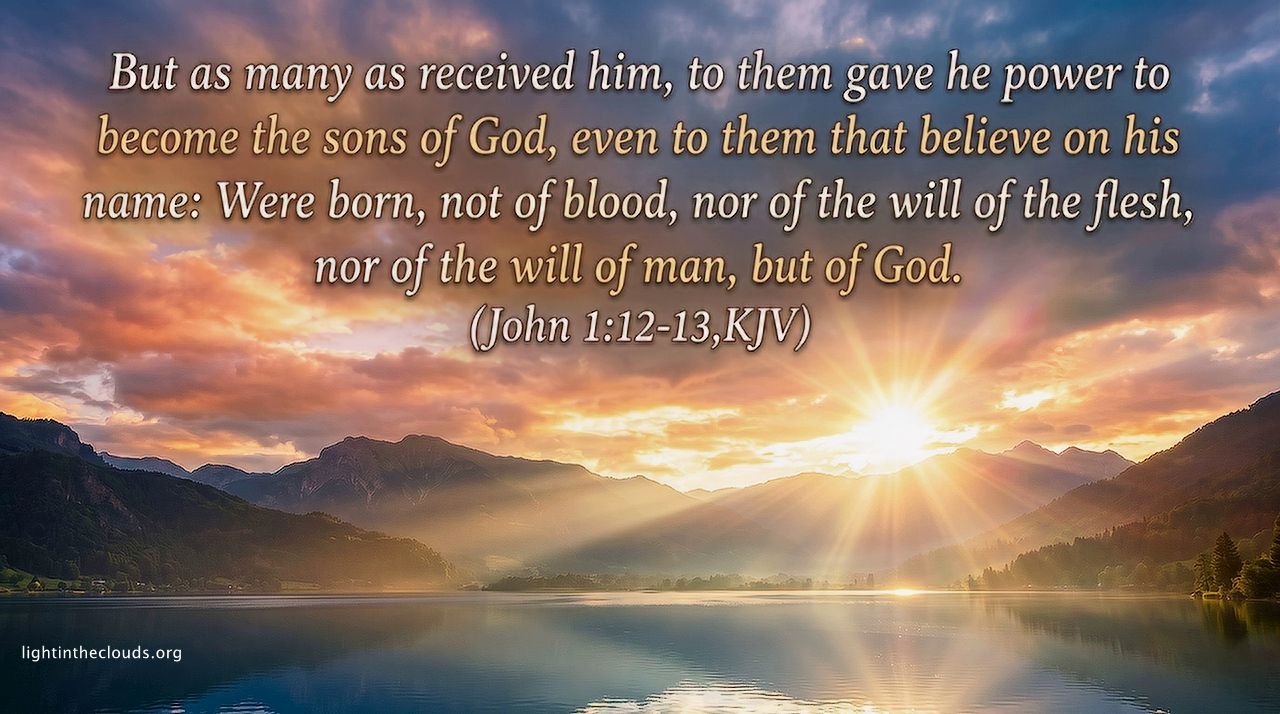
When we walk in a relationship with Christ, something remarkable happens. The Bible says that anyone in Christ becomes a new creation. Our identity is no longer defined by past failures, pain, or the opinions of others. My identity is rooted in God’s love. Because of that truth, I can say with confidence, “By the grace of God, I am what I am.” (1 Cor 15:10,) And through Christ, I am more than a conqueror. (Rom 8:37). “… to all who did receive him, to those who believed in his name, he gave the right to become children of God.” (John 1:12)

In the Bible, identity is not something you invent or earn, but something we may receive from God whenever we ask, and this truth is most clearly seen in Christ and Him crucified. The message of the cross shows that identity is not built on human effort or perceived worthiness, but on what Jesus has already accomplished through His death and resurrection. The Bible says in John 1:12, “to them that received Him gave He POWER to be the sons and daughters of God.” He gives us the power to either be or become the sons and daughter of God!

Through Christ and Him crucified, sin and shame no longer define a person; instead, those who believe are given a new identity grounded in grace, forgiveness, and reconciliation with God. This means identity is not fragile or dependent on performance, but secure because it rests on the finished work of Jesus. Rather than striving to prove who or what you are (God already knows, John 2:25), the gospel calls you to trust in Christ and receive what He has already secured, shaping your identity not around your past failure or achievements, but around His sacrifice and love. This is why God Himself calls us “sons and daughters of God.”

“I will be a Father to you, and you shall be My sons and daughters, says the Lord Almighty.” (2 Cor 6:18, MKJV)

Out of the World, Into God’s Family

“Those who come out of the world in spirit and in all practice may regard themselves as sons and daughters of God. They may believe His Word as a child believes every word of his parents. Every promise is sure to him that believes. Those who unite with the Father, the Son, and the Holy Spirit, who show by their lives that they are no longer following the course they followed before they united with these divine methods, will receive the wisdom from above. They will not depend on human wisdom. In order to deal righteously with the world, as members of the royal family, children of the heavenly King, Christians must feel their need of a power which comes only from the heavenly agencies who have pledged themselves to work in their behalf.” {6BC 1102.3}

“After we have formed a union with the great threefold power, we shall regard our duty toward the members of God’s family with a much more sacred awe than we have ever done before. This is a phase of religious reform that very few appreciate. Those who seek to answer the prayer, “Thy will be done in earth, as it is in heaven,” will seek by living pure, sanctified lives to show to the world how the will of God is done in heaven.” {6BC 1102.4}

A Place Prepared by God

Reading Time: 6 minutes

based on Rev 12:6

“Then the woman fled into the wilderness, where she has a place prepared by God, that they should feed her there one thousand two hundred and sixty days.” (Rev 12:6)

Rev 12:6
Rev 12:6

What does “a place prepared by God” mean?

In Rev 12:6,the “woman” symbolically represents “God’s people” (sometimes understood as the church). The “wilderness” represents a place of “protection, refuge, and separation from danger.”

When it says “a place prepared by God,” it means that “God Himself had already arranged a safe refuge for His people before the danger came.” It shows that God is not reacting at the last minute, rather He anticipates the need and prepares provision and protection for His people ahead of time.

What are the key ideas in the phrase “a place prepared by God?”

“Divine planning” God already arranged the place.

“Protection” the place shields His people from the enemy.

“Provision” the verse says they would be “fed” there.

“Temporary refuge” the wilderness is not permanent, but it serves to sustain during hardship.

The main message of Rev 12:6 is that “God takes care of His people even during times of persecution or trial.”

The Pattern: God Always Prepares a Place

The Bible repeatedly shows that “God prepares places, provisions, or paths for His people before they arrive there.” Revelation 12:6 fits into this larger biblical pattern.

God prepared a place in the wilderness for Israel. Just as in Revelation, God protected and sustained His people in the wilderness.

“Then the LORD said to Moses, ‘Behold, I will rain bread from heaven for you.’” (Exodus 16:4)

God led Israel into the wilderness, but He had already planned how He would provide food (manna) and water.

“The LORD your God led you these forty years in the wilderness… that He might make you know that man shall not live by bread alone.” (Deut 8:2-3)

In Scripture, the wilderness became a place God prepared for testing, teaching, and sustaining His people.

God prepares places of protection

Throughout Scripture, God prepares safe places before danger arrives.

“Hide yourself by the Brook Cherith… I have commanded the ravens to feed you there.” (1 Kings 17:3-4)

Before the famine worsened, God had already prepared a place and provision for Elijah.

This is very similar to Revelation 12:6, “a hidden place where God feeds and protects His servant.”

God prepares blessings and paths ahead of us

God often prepares what we need before we even know we will need it.

“You prepare a table before me in the presence of my enemies.” (Psalms 23:5)

Even when surrounded by difficulty, God prepares provision and blessing. Micah 7:8 tells us “even when I sit in darkness, the Lord will be a light unto me.”

“We are His workmanship… created in Christ Jesus for good works, which God prepared beforehand that we should walk in them.” (Eph 2:10)

Jesus left us with the following assurance

“My Father’s house has many rooms; if that were not so, would I have told you that I am going there to prepare a place for you? And if I go and prepare a place for you, I will come back and take you to be with me that you also may be where I am.” (John 14:2-3)

The really good news here is that God not only prepares places, He prepares purposes and paths for our lives.

Jesus prepares our eternal place. When I think about eternity, one of the most comforting promises Jesus gave is that He is personally preparing a place for me. Heaven is not uncertain or unplanned. Christ Himself is making ready a home for His people.

Jesus said:

“Then shall the King say unto them on his right hand, Come, ye blessed of my Father, inherit the kingdom prepared for you from the foundation of the world.” (Mat 25:34)

“But now they desire a better country, that is, an heavenly: wherefore God is not ashamed to be called their God: for he hath prepared for them a city.” (Heb 11:16)

These promises remind me that Heaven is not just a distant hope. Jesus is actively preparing it right now. The same Savior who died for me is also preparing a place where I can live with Him forever. And Jesus is preparing me to live with Him forever too. Jesus described the final inheritance of the saved when He said:

“Then shall the King say unto them on his right hand, Come, ye blessed of my Father, inherit the kingdom prepared for you from the foundation of the world.” (Math 25:34)

This means that God planned the eternal home of His people long before we were even born. Heaven is not an afterthought. From the foundation of the world, God prepared a kingdom for those who love Him.

The apostle Peter also points to this future hope:

“Blessed be the God and Father of our Lord Jesus Christ… to an inheritance incorruptible, and undefiled, and that fadeth not away, reserved in heaven for you.” (1 Peter 1:3–4)

Knowing that my inheritance is reserved in heaven gives me confidence that my future with Christ is secure. While Jesus prepares a place for His people, He is also preparing His people for that place. Through His Word, His Spirit, and His work in our lives, He is shaping our characters so that we will be ready for heaven.

“Beloved, now are we the sons of God… but we know that, when he shall appear, we shall be like him; for we shall see him as he is.” (1 John 3:2)

This verse teaches that our transformation begins now. As children of God, He is already working in our lives so that when Christ returns, we will reflect His character. The process of becoming like Christ is part of God preparing us for eternity.

“Christ is preparing mansions for those who love Him. There are mansions for us in the kingdom of God.”  ( The Adventist Home,  540)

“For whom he did foreknow, he also did predestinate to be conformed to the image of his Son.” (Rom 8:29)

Such promises remind me that Heaven is a real home prepared by a loving Savior. Just as God prepared a place of refuge for His people in the wilderness of Revelation 12:6, He has also prepared our eternal home.
God does not only prepare a place for us in eternity—He also prepares us for that place by shaping our character now through His Spirit, His Word, and the experiences He allows in our lives.

My Hope

If in this life only we have hope in Christ, we are of all men most miserable.” (1 Cor 15:19)

“Beloved, now are we the sons of God, and it doth not yet appear what we shall be: but we know that, when he shall appear, we shall be like him; for we shall see him as he is.” (1 John 3:2)

Because Jesus is preparing a place for me, I can live with hope. No matter what difficulties I face now, I know that a home with Christ is already being prepared. One day He will return and fulfill His promise:

“And if I go and prepare a place for you, I will come again, and receive you unto myself; that where I am, there ye may be also.” (John 14:3)

God prepares both a place for His people and His people for that place.

Revelation 12:6 — God prepares a place for His people in times of trial.
Romans 8:29 — God prepares His people to reflect Christ’s character.

One shows God’s protection, the other shows God’s transformation. Romans 8:29 shows God preparing His people for eternity by shaping them into the likeness of Christ. Revelation 12:6 shows God preparing a place for His people. Both verses reveal the same truth: nothing about God’s plan for His people is accidental—He prepares everything in advance.

“The trials of life are God’s workmen to remove the impurities and roughness from our character. Their hewing, squaring, and chiseling, their burnishing and polishing, is a painful process; it is hard to be pressed down to the grinding wheel. But the stone is made ready to fill its place in the heavenly temple.”
(MB 10)

“God takes [people] as they are, with the human elements in their character, and trains them for His service, if they will be disciplined and learn of Him. They are not chosen because they are perfect, but notwithstanding their imperfections, that through the knowledge and practice of the truth, through the grace of Christ, they may become transformed into His image.” (DA 294)

You Must Be Ready

Be ready and keep your lamps burning, just like those servants who wait up for their master to return from a wedding feast. As soon as he comes and knocks, they open the door for him. Servants are fortunate if their master finds them awake and ready when he comes! I promise you that he will get ready and have his servants sit down so he can serve them. Those servants are really fortunate if their master finds them ready, even though he comes late at night or early in the morning. You would surely not let a thief break into your home, if you knew when the thief was coming. So always be ready! You don’t know when the Son of Man will come. (Luke 12:35-40, CEV)

Such promises assure us that Heaven is not just about a place for me to go one day — it is about us all being personally prepared to be with Jesus forever.

“A Cloud Received Him”

Reading Time: 8 minutes

(based on Acts 1:9)

“And when he had spoken these things, while they beheld, he was taken up; and a cloud received him out of their sight.” (Acts 1:9, KJV)

a cloud received Him (Acts 1:9)

Our opening text describes the “Ascension of Christ” a transitional moment between His post-resurrection ministry and His heavenly intercession. The phrase “a cloud received Him” is packed with theological, biblical, and symbolic meaning.

The Immediate, Literal Sense

At the most basic level, the text describes a very visible, physical event:

Jesus is “taken up.”  The passive voice used here suggests divine agency (the Father exalting the Son).

We know that the disciples are watching (“while they beheld”). This is not visionary but based upon personal experience.

A cloud receives/obscures Jesus from the sight of those watching this all unfold — marking the end of any visible interaction with Jesus.

The cloud functions in several ways such as:

A visual boundary between earthly and heavenly realms

A natural yet divinely timed concealment

Scripture rarely uses the word “cloud” in a simple, meteorological sense when tied to divine action. In Scripture, clouds always mean something.

The Cloud as the Very Presence of God

In biblical theology, clouds often signify “God’s manifest presence.”

For example, Moses went directly into a thick dark cloud “where God was.”

And the LORD said unto Moses, lo, I come unto thee in a thick cloud, that the people may hear when I speak with thee, and believe you forever. And Moses told the words of the people unto the LORD. (Exodus 19:9)

Old Testament Parallels to Acts 1:9)

The Lord went before Israel in a “pillar of cloud” (Exodus 13:21–22)

The cloud covered the tabernacle, and the glory of the Lord filled it (Exodus 40:34–35

“One like the Son of man came with the clouds of heaven” (Daniel 7:13)

“A bright cloud overshadowed them…” “This is my beloved Son” (Matthew 17:5) [Transfiguration]

The cloud is not simply hiding Jesus—it is “receiving Him into divine glory.”

“A cloud received Him” can mean things like:

Jesus is carried into the immediate presence of God. Jesus is “enthroned and vindicated.” (see Daniel 7 imagery)

The Cloud as a Vehicle of Divine Majesty

In Scripture, clouds are sometimes portrayed as the “chariot or vehicle of God:”

“Who maketh the clouds his chariot” (Psalm 104:3)

Acts 1:9 also echoes this imagery:

Christ is not drifting upward aimlessly—He is being escorted in royal procession.

“The disciples not only saw the Lord ascend, but they had the testimony of the angels that He had gone to occupy His Father’s throne in heaven. The last remembrance that the disciples were to have of their Lord was as the sympathizing Friend, the glorified Redeemer. Moses veiled his face to hide the glory of the law which was reflected upon it, and the glory of Christ’s ascension was veiled from human sight. The brightness of the heavenly escort and the opening of the glorious gates of God to welcome Him were not to be discerned by mortal eyes.”  {6BC 1053.8}

The Ascension is not so much a departure as it is a coronation movement, where the cloud functions like a royal escort into heaven. (Acts 1:10-11)

“Christ came as a personal Saviour to the world. He represented a personal God. He ascended on high as a personal Saviour and will come again as He ascended to heaven–a personal Saviour.  {6BC 1054.2}

The Cloud of Promise

A very similar imagery appears in Bible accounts of Christ’s Second Coming:

Just two verses later, in Acts 1:11, we read “This same Jesus… shall so come in like manner.”

“Behold Jesus comes with clouds, and every eye shall see Him (Rev 1:7)

“For the Lord himself shall descend from heaven with a shout, with the voice of the archangel, and with the trump of God: and the dead in Christ shall rise first: Then we which are alive and remain shall be caught up together with them in the clouds, to meet the Lord in the air: and so shall we ever be with the Lord.” (1 Thes 4:16-17)

“When Christ comes to gather to Himself those who have been faithful, the last trump will sound, and the whole earth, from the summits of the loftiest mountains to the lowest recesses of the deepest mines, will hear. The righteous dead will hear the sound of the last trump, and will come forth from their graves, to be clothed with immortality, and to meet their Lord.”  {7BC 909.2}

The cloud is both “departure medium” and a return signature of sorts that reflects upon a beautiful symmetry:

Ascension: hidden in cloud

Return: revealed in clouds

The Cloud as Boundary Between Realms

The phrase “out of their sight” is very crucial, with the cloud representing

The “limit of human perception.”

The transition from: a) His very visible, incarnate ministry to an invisible, heavenly ministry.

Hebrews 8:1 “We have such a high priest… set on the right hand of the throne” which tells us how the cloud marks not His absence, but a special change in the mode of His presence.

In Adventist understandings, this moment is often understood as:

Christ entering the heavenly ministry within the cloud signifying Jesus’ transition into the heavenly sanctuary. (Heb 7:25)

Hebrews 9:24 tells us that “Christ is… entered into heaven itself.”

Not spatial distance, but a functional shift: “A cloud of angels received Him out of their sight.” (Acts of the Apostles,33)

Here the cloud is interpreted as:

Not vapor, but as *a host of angels forming a living chariot.”

As Psalms 68:17 says: “the chariots of God are twenty thousand”

  1. c) Our Special Assurance of Continued Mediation

The cloud does not mean separation in our relationship: Jesus remains actively engaged in: Intercession, and High priestly ministry,

Linguistic Note on “Received” (Greek Insight)

The Greek word ὑπέλαβεν (hypelaben) (received) can mean things like:

Took up, received under, or enveloped. This suggests not merely blocking from our sight but of actively enveloping and carrying. The cloud embraces, transports, and claims Jesus into glory

The phrase “a cloud received Him” can be understood simultaneously on multiple levels:

  1. “Literal” a visible cloud obscures Him
  2. “Theophanic” manifestation of God’s presence
  3. “Royal” — vehicle of divine enthronement
  4. “Eschatological” a pattern for His return
  5. “Transitional” the boundary between earthly and heavenly ministry
  6. “Angel Ministry” a multitude of angels escorting Christ

We can assume the cloud is not incidental, rather, it is interpretive. It explains the meaning of the Ascension. Christ is not disappearing, He is being received into divine glory, authority, for the express purpose of an ongoing priestly work. (Heb 7:25)

For there is one God and one mediator between God and mankind, the man Christ Jesus, (1 Tim 2:5, NIV)

“God is approached through Jesus Christ, the Mediator, the only way through which He forgives sins. God cannot forgive sins at the expense of His justice, His holiness, and His truth. But He does forgive sins and that fully. There are no sins He will not forgive in and through the Lord Jesus Christ. This is the sinner’s only hope, and if he rests here in sincere faith, he is sure of pardon and that full and free. There is only one channel and that is accessible to all, and through that channel a rich and abundant forgiveness awaits the penitent, contrite soul and the darkest sins are forgiven.”  {7BC 912.9}

“These lessons were taught to the chosen people of God thousands of years ago, and repeated in various symbols and figures, that the work of truth might be riveted in every heart, that without the shedding of blood there is no remission of sins. The great lesson embodied in the sacrifice of every bleeding victim, impressed in every ceremony, inculcated by God Himself, was that through the blood of Christ alone is forgiveness of sins; yet how many carry the galling yoke and how few feel the force of this truth and act upon it personally, and derive the blessings they might receive through a perfect faith in the blood of the Lamb of God.” {7BC 913.1}

“This is the covenant that I will make with them after those days, saith the Lord, I will put my laws into their hearts, and in their minds will I write them. And their sins and iniquities will I remember no more. Now where remission of these is, there is no more offering for sin. Having therefore, brethren, boldness to enter the holiest by the blood of Jesus, by a new and living way, which he hath consecrated for us, through the veil, that is to say, his flesh;” (Heb 10:16-20)

Entering the Sanctuary with Christ.

“This is the great day of atonement, and our Advocate is standing before the Father, pleading as our intercessor. In place of wrapping about us the garments of self-righteousness, we should be found daily humbling ourselves before God, confessing our own individual sins, seeking the pardon of our transgressions, and cooperating with Christ in the work of preparing our souls to reflect the divine image. Unless we enter the sanctuary above and unite with Christ in working out our own salvation with fear and trembling, we shall be weighed in the balances of the sanctuary and shall be pronounced wanting.” {7BC 933.14}

We must pay the most careful attention, therefore, to what we have heard, so that we do not drift away.

“For since the message spoken through angels was binding, and every violation and disobedience received its just punishment, how shall we escape if we ignore so great a salvation? This salvation, which was first announced by the Lord, was confirmed to us by those who heard him. God also testified to it by signs, wonders and various miracles, and by gifts of the Holy Spirit distributed according to his will. It is not to angels that he has subjected the world to come, about which we are speaking. But there is a place where someone has testified: “What is mankind that you are mindful of them, a son of man that you care for him? You made them a little lower than the angels; you crowned them with glory and honor and put everything under their feet.” In putting everything under them, God left nothing that is not subject to them. Yet at present we do not see everything subject to them. But we do see Jesus, who was made lower than the angels for a little while, now crowned with glory and honor because he suffered death, so that by the grace of God he might taste death for everyone. In bringing many sons and daughters to glory, it was fitting that God, for whom and through whom everything exists, should make the captain [pioneer] of their salvation perfect through what he suffered.” (Heb 2:1-10, NIV)

“While the disciples were gazing upward to catch the last glimpse of their ascending Lord, He was received into the rejoicing ranks of heavenly angels. As these angels escorted Him to the courts above, they sang in triumph, “Sing unto God, ye kingdoms of the earth, O sing praises unto the Lord, to Him that rides upon the heavens of heavens. Ascribe ye strength unto God: His excellency is over Israel, and His strength is in the heavens.” Psalm 68:32-34, margin.  {AA 32.3}

“The disciples were still looking earnestly toward heaven when, “behold, two men stood by them in white apparel; which also said, Ye men of Galilee, why stand ye gazing up into heaven? this same Jesus, which is taken up from you into heaven, shall so come in like manner as ye have seen Him go into heaven.” Acts 1:10, 11. {AA 33.1}

“The promise of Christ’s second coming was ever to be kept fresh in the minds of His disciples. The same Jesus whom they had seen ascending into heaven, would come again, to take to Himself those who here below give themselves to His service. The same voice that had said to them, “Lo, I am with you always, even unto the end,” would bid them welcome to His presence in the heavenly kingdom.”  {AA 33.2}

Christ is coming on the clouds, (Rev 1:7) and every eye will see Him. His desire for you is that THAT cloud also “receive you” for Jesus is the light of the world, (John 8:12) and that means there is Light in every cloud.

Expect it.

Immediately

Reading Time: 7 minutes

“And immediately the Spirit drove him into the wilderness.”  Mark 1:12 (KJV)

Mark 1:12
Mark 1:12

Mark’s Gospel is the Gospel of urgency. Over forty times he uses words like “immediately,” “straightway”, and “forthwith”. But nowhere is the word more spiritually charged than here — the moment Christ moves from divine affirmation into direct conflict.

The heavens have just opened. The Father has declared: “Thou art my beloved Son, in whom I am well pleased.” (Mark 1:11) And then, without pause, delay, or recovery, “immediately” the Spirit drives Jesus into the wilderness. Such a transition reveals a consistent biblical pattern: “God often permits testing right after revelation.”

Divine Approval Followed by Divine Testing

Scripture repeatedly shows that moments of spiritual clarity are often followed by intense trials.

“Beloved, think it not strange concerning the fiery trial which is to try you…” (1 Peter 4:12)

“My brethren, count it all joy when ye fall into various temptations; knowing this, that the trying of your faith worketh patience.” (James 1:2–3)

“After the Lord had spoken unto Moses… the people were sore afraid.” (Exodus 20:18–19)

“Immediately” after the tribulation… shall appear the sign of the Son of man.” (Matthew 24:29–30)

God does not separate our calling from our refining. He joins them together. This is why we can say “all things work together for good if you love Jesus.” (Rom 8:28) If you love Jesus your eyes are opened so that you can see His providential working in everything. Jesus is led into the wilderness simply because He is God’s Son.

The Spirit Descends in Peace and Drives with Purpose

“The Spirit drives him,” implying forceful, intentional movement. This was not temptation by chance. It was training by design.

“After His baptism, Christ was led by the Spirit into the wilderness to be tempted by Satan. When He was taken into the wilderness to be tempted, He was under the special guidance of God. God did not lead Him into temptation, but the Spirit led Him into the wilderness to be tempted by the devil.”  (DA 114)

“It was the Holy Spirit that led Jesus into the wilderness to be tempted. God suffered His Son to be tried, that humanity might be benefited by His example.” (DA 114)

The wilderness was not abandonment. Being led or driven into the wilderness was preparation for victory on behalf of humanity.

Why the Enemy Attacks Immediately

Notice Satan’s first words in the temptation: “If thou be the Son of God…” (Matthew 4:3) This kind of assault directly targets what God has just spoken. This pattern continues throughout Scripture:

After Israel is called God’s son, Pharaoh intensifies bondage (Exodus 5). After David is anointed king, Saul hunts him down like an animal. (1 Samuel 18–24) After Paul’s conversion, persecution begins at once (Acts 9:20–25).

Establishment of Spiritual Identity Invites Spiritual Attack.

“No sooner does the child of God commit himself to the service of Christ than the powers of darkness are aroused to defeat [them].” SC 71

The closer one walks with God, the more intentional, and aggressive the opposition becomes.

The Wilderness as God’s Classroom

Too often we see our hardship as a detour. As out of place. Or as “exceptional.” Scripture, however, presents it as a necessary stage of our personal, spiritual development.

“I did know thee in the wilderness, in the land of great drought.” (Hosea 13:5)

“Who led thee through that great and terrible wilderness… that He might humble thee, and that He might prove thee.” (Deut 8:15–16)

“Though now for a season, if need be, ye are in heaviness through manifold temptations.” (1 Peter 1:6)

God uses isolation and temptation to deepen our dependence on Him, and to impress us with a greater sense of “the everlasting gospel” as it plays out in “the great controversy”.

“The wilderness was the place of preparation for Christ’s public ministry. In solitude He was to learn the lessons of submission and dependence upon God.” (DA 114)

“Where there is success there is danger. Continuous prosperity is not favorable to spirituality. Adversity and disappointment are needed to drive us to God. As the fire purifies the precious metals, so God purifies the hearts of His children by the fiery trial of affliction. Ease and prosperity may lead to forgetfulness of God, and a loss of dependence upon Him; but difficulties and hardships lead men to seek God for strength and support.”

“In times of great spiritual light and privilege, there is danger that self-confidence will be cherished, and that there will not be that careful dependence upon God which there should be. When the Lord is working mightily for His people, there is peril lest they shall take glory to themselves and forget that God is the source of their strength.” (Ev 692)

“When success attends the efforts put forth in the cause of God, there is danger of exalting self, of thinking that we are sufficient of ourselves. We are in constant need of humility and watchfulness.” (Ev 692)

More About “Immediately”

The word “immediately” teaches several spiritual truths:

True Obedience Is Never Delayed

Whenever something is going on, Jesus does not question the Spirit’s leading.  “I delight to do thy will, O my God.” (Psalm 40:8) A true child of God springs into full action when Creator speaks.

God Does Not Waste Spiritual Momentum

Moments of revelation are often like launching pads for our refinement.

The Lord frequently places us in difficult positions to stimulate us to greater exertion. In His providence special annoyances sometimes occur to test our patience and faith. God gives us lessons of trust. He would teach us where to look for help and strength in time of need. Thus, we obtain practical knowledge of His divine will, which we so much need in our life experience. Faith grows strong in earnest conflict with doubt and fear.

“You may be a conqueror if you take careful heed to your ways. You should devote your life to the cause of God and pray for success. You should not close your eyes to your danger but should resolutely prepare for every difficulty in your Christian advancement. Take time for reflection and for humble, earnest prayer. Your talents are marked, and you are hopeful regarding your future success; but unless you comprehend the weakness of your natural heart you will be disappointed.”  {4T 116.3}

“Let the one to whom God gives success in his work, keep on the garments of humility and contrition, if he desires to remain of value in the sight of heaven. Whether he be a successful evangelist, a gifted teacher, a clear writer, let him also be a man of faith, a man of prayer; let him never place human merit where God’s honor should be. Only those who are cleansed from all self-exaltation can become complete in Christ. While the workers keep their eyes fixed on Christ, they are safe. When they lose sight of him, they are in the greatest danger.” {RH, October 7, 1909, par. 12}

“Persecution is often followed by great results. Success had attended the ministry of the word in Jerusalem, and there was danger that the disciples would linger there too long, forgetful of the Savior’s commission to go into all the world. They began to think that they had a work to do in Jerusalem in shielding the members of the church from the snares of the enemy, forgetting that strength to resist temptation is best gained by active service.

Instead of educating the new converts to carry the gospel to those who had not heard it, they were in danger of being satisfied with what had been accomplished. To scatter his representatives abroad, where they could work for others, God permitted persecution to come upon his church. Driven from Jerusalem, the believers “went everywhere preaching the word.” Thus began the fulfillment of the prediction of the Saviour, “Ye shall be witnesses unto me both in Jerusalem, and in all Judea, and in Samaria, and unto the uttermost part of the earth.” {RH, March 2, 1911, par. 2}

“For whom the Lord loveth He chastens.” (Hebrews 12:6) Love disciplines. Calling purifies.

Trials Are Often Signs of Advancement, Not Failure

“We must through much tribulation enter into the kingdom of God.” (Acts 14:22)

Hardship is not evidence God has left. Trials and temptations are more often evidence that Creator is working deeply in our hearts.

“For the word of God is alive and active. Sharper than any double-edged sword, it penetrates even to dividing soul and spirit, joints and marrow; it judges the thoughts and attitudes of the heart.” (Heb 4:12, NIV)

Encouragement for Believers Facing Sudden Trials

When difficulties rise quickly after prayer, commitment, baptism, or spiritual growth — Mark 1:12 explains why. The Spirit may be strengthening our faith, or increasing our faith, not punishing it.

 “The trials of life are God’s workmen to remove the impurities and roughness from our character.” (MB 10)

“Every temptation that is resisted, every trial bravely borne, gives us a new experience and advances us in the work of character building.” (MH 500)

Conclusion

That one word “immediately” totally dismantles the false gospel of “comfort without conflict.”

“Immediately” teaches how that God’s favor does not help us to avoid trials, God’s Spirit sometimes leads into hardship, God’s purpose often unfolds through isolation, pressure, crises, or even persecution.

“In fact, everyone who wants to live a godly life in Christ Jesus will be persecuted” (2 Tim 3:12)

We are also told how that the same Spirit who drives us into the wilderness sustains us in it. God’s people have the most remarkable testimonies from their wilderness experiences. The same God who allows testing, guarantees victory. Jesus entered the wilderness immediately. Jesus emerged from the wilderness in the power and glory of “the everlasting gospel.”

“For I am not ashamed of the gospel, because it is the power of God that brings salvation to everyone who believes: first to the Jew, then to the Gentile. For in the gospel the righteousness of God is revealed. A righteousness that is by faith from first to last, just as it is written: “The righteous will live by faith.” (Rom 1:16-17, NIV)

This is the immediate gospel “power” which all who emerge from the wilderness where they are “immediately” led to will possess. “To all of them who receive Jesus gives He power to be or become the sons and daughters of God.” (John 1:12)

A Growing Understanding of Faith

“They also that erred in spirit shall come to understanding, and they that murmured shall learn doctrine.” Isa 29:22-24.  {AA 382.1}

“The righteousness of Christ is revealed from faith to faith; that is, from your present faith to an increased understanding of that faith which works by love and purifies the soul” (6BC 1067.5)

God’s Call Leads Us Straight into Battle

Reading Time: 7 minutes

“And immediately the Spirit drove him into the wilderness.”  Mark 1:12 (KJV)

Phil 2:13
Phil 2:13

Mark’s Gospel is the Gospel of urgency. Over forty times he uses words like “immediately,” “straightway”, and “forthwith”. But nowhere is the word more spiritually charged than here — the moment Christ moves from divine affirmation into direct conflict.

The heavens have just opened. The Father has declared: “Thou art my beloved Son, in whom I am well pleased.” (Mark 1:11) And then, without pause, delay, or recovery, “immediately” the Spirit drives Jesus into the wilderness. Such a transition reveals a consistent biblical pattern: God often permits testing right after revelation.

Divine Approval Followed by Divine Testing

Scripture repeatedly shows that moments of spiritual clarity are often followed by intense trials.

“Beloved, think it not strange concerning the fiery trial which is to try you…” (1 Peter 4:12)

“My brethren, count it all joy when ye fall into various temptations; knowing this, that the trying of your faith worketh patience.” (James 1:2–3)

“After the Lord had spoken unto Moses… the people were sore afraid.” (Exodus 20:18–19)

“Immediately” after the tribulation… shall appear the sign of the Son of man.” (Matthew 24:29–30)

God does not separate calling from refining. He joins them together. This is why we can say “all things work together for good if you love Jesus.” (Rom 8:28) If you love Jesus your eyes are opened so that you can see His providential working in everything. Jesus is led into the wilderness simply because He is God’s Son.

The Spirit Descends in Peace and Drives with Purpose

“The Spirit drives him,” implying forceful, intentional movement. This was not temptation by chance. It was training by design.

“After His baptism, Christ was led by the Spirit into the wilderness to be tempted by Satan. When He was taken into the wilderness to be tempted, He was under the special guidance of God. God did not lead Him into temptation, but the Spirit led Him into the wilderness to be tempted by the devil.”  (DA 114)

“It was the Holy Spirit that led Jesus into the wilderness to be tempted. God suffered His Son to be tried, that humanity might be benefited by His example.” (DA 114)

The wilderness was not abandonment. Being led or driven into the wilderness was preparation for victory on behalf of humanity.

Why the Enemy Attacks Immediately

Notice Satan’s first words in the temptation: “If thou be the Son of God…” (Matthew 4:3) This kind of assault directly targets what God has just spoken. This pattern continues throughout Scripture:

After Israel is called God’s son, Pharaoh intensifies bondage (Exodus 5). After David is anointed king, Saul hunts him down like an animal. (1 Samuel 18–24) After Paul’s conversion, persecution begins at once (Acts 9:20–25).

Establishment of Spiritual Identity Invites Spiritual Attack.

“No sooner does the child of God commit himself to the service of Christ than the powers of darkness are aroused to defeat [them].” SC 71

The closer one walks with God, the more intentional, and aggressive the opposition becomes.

The Wilderness as God’s Classroom

Too often we see our hardship as a detour. As out of place. Or as “exceptional.” Scripture, however, presents it as a necessary stage of our personal, spiritual development.

“I did know thee in the wilderness, in the land of great drought.” (Hosea 13:5)

“Who led thee through that great and terrible wilderness… that He might humble thee, and that He might prove thee.” (Deut 8:15–16)

“Though now for a season, if need be, ye are in heaviness through manifold temptations.” (1 Peter 1:6)

God uses isolation and temptation to deepen our dependence on Him, and to impress us with a greater sense of “the everlasting gospel” as it plays out in “the great controversy”.

“The wilderness was the place of preparation for Christ’s public ministry. In solitude He was to learn the lessons of submission and dependence upon God.” (DA 114)

Where there is success there is danger. Continuous prosperity is not favorable to spirituality. Adversity and disappointment are needed to drive us to God. As the fire purifies the precious metals, so God purifies the hearts of His children by the fiery trial of affliction. Ease and prosperity may lead to forgetfulness of God, and a loss of dependence upon Him; but difficulties and hardships lead men to seek God for strength and support.”

“In times of great spiritual light and privilege, there is danger that self-confidence will be cherished, and that there will not be that careful dependence upon God which there should be. When the Lord is working mightily for His people, there is peril lest they shall take glory to themselves and forget that God is the source of their strength.” (Ev 692)

“When success attends the efforts put forth in the cause of God, there is danger of exalting self, of thinking that we are sufficient of ourselves. We are in constant need of humility and watchfulness.” (Ev 692)

More About “Immediately”

The word “immediately” teaches several spiritual truths:

True Obedience Is Never Delayed

Whenever something is going on, Jesus does not question the Spirit’s leading.  “I delight to do thy will, O my God.” (Psalm 40:8) A true child of God springs into full action when Creator speaks.

God Does Not Waste Spiritual Momentum

Moments of revelation are often like launching pads for our refinement.

The Lord frequently places us in difficult positions to stimulate us to greater exertion. In His providence special annoyances sometimes occur to test our patience and faith. God gives us lessons of trust. He would teach us where to look for help and strength in time of need. Thus, we obtain practical knowledge of His divine will, which we so much need in our life experience. Faith grows strong in earnest conflict with doubt and fear.

You may be a conqueror if you take careful heed to your ways. You should devote your life to the cause of God and pray for success. You should not close your eyes to your danger but should resolutely prepare for every difficulty in your Christian advancement. Take time for reflection and for humble, earnest prayer. Your talents are marked, and you are hopeful regarding your future success; but unless you comprehend the weakness of your natural heart you will be disappointed.  {4T 116.3}

Let the one to whom God gives success in his work, keep on the garments of humility and contrition, if he desires to remain of value in the sight of heaven. Whether he be a successful evangelist, a gifted teacher, a clear writer, let him also be a man of faith, a man of prayer; let him never place human merit where God’s honor should be. Only those who are cleansed from all self-exaltation can become complete in Christ. While the workers keep their eyes fixed on Christ, they are safe. When they lose sight of him, they are in the greatest danger. {RH, October 7, 1909, par. 12}

Persecution is often followed by great results. Success had attended the ministry of the word in Jerusalem, and there was danger that the disciples would linger there too long, forgetful of the Saviour’s commission to go into all the world. They began to think that they had a work to do in Jerusalem in shielding the members of the church from the snares of the enemy, forgetting that strength to resist temptation is best gained by active service.

Instead of educating the new converts to carry the gospel to those who had not heard it, they were in danger of being satisfied with what had been accomplished. To scatter his representatives abroad, where they could work for others, God permitted persecution to come upon his church. Driven from Jerusalem, the believers “went everywhere preaching the word.” Thus began the fulfillment of the prediction of the Savior, “Ye shall be witnesses unto me both in Jerusalem, and in all Judea, and in Samaria, and unto the uttermost part of the earth.” {RH, March 2, 1911, par. 2}

“For whom the Lord loves He chastens.” (Hebrews 12:6) God’s Love disciplines. God’s calling purifies.

Trials Are Often Signs of Advancement, Not Failure

“We must through much tribulation enter into the kingdom of God.” (Acts 14:22)

Hardship is not evidence God has left. Trials and temptations are more often evidence that Creator is working deeply.

For the word of God is alive and active. Sharper than any double-edged sword, it penetrates even to dividing soul and spirit, joints and marrow; it judges the thoughts and attitudes of the heart. (Heb 4:12, NIV)

Encouragement for Believers Facing Sudden Trials

When difficulties rise quickly after prayer, commitment, baptism, or spiritual growth — Mark 1:12 explains why. The Spirit may be strengthening our faith, or increasing our faith, not punishing it.

“The trials of life are God’s workmen to remove the impurities and roughness from our character.” (MB 10)

“Every temptation that is resisted, every trial bravely borne, gives us a new experience and advances us in the work of character building.” (MH 500)

Conclusion

That one word “immediately” efficiently dismantles the false gospel of comfort without conflict.

“Immediately” teaches how that God’s favor does not cancel trials, God’s Spirit sometimes leads into hardship, God’s purpose often unfolds through isolation, pressure, crises, or even persecution.

In fact, everyone who wants to live a godly life in Christ Jesus will be persecuted (2 Tim 3:12)

And yet, we are told how that the same Spirit who drives us into the wilderness sustains us in it. God’s people have the most remarkable testimonies from their wilderness experiences. The same God who allows testing guarantees victory. Jesus entered the wilderness immediately. Jesus emerged from the wilderness in the power and glory of the everlasting gospel.

For I am not ashamed of the gospel, because it is the power of God that brings salvation to everyone who believes: first to the Jew, then to the Gentile. For in the gospel the righteousness of God is revealed. A righteousness that is by faith from first to last, just as it is written: “The righteous will live by faith.” (Rom 1:16-17, NIV)

This is the gospel “power” which all who emerge from the wilderness where they are “immediately” led to will possess. “To all of them who receive Jesus gives He power to be or become the sons and daughters of God.” (John 1:12)

A Growing Understanding of Faith

They also that erred in spirit shall come to understanding, and they that murmured shall learn doctrine.” Isa 29:22-24.  {AA 382.1}

The righteousness of Christ is revealed from faith to faith; that is, from your present faith to an increased understanding of that faith which works by love and purifies the soul (6BC 1067.5)

Waiting In The Ark

Reading Time: 9 minutes

Friends, the message God gave in Noah’s day was simple: Get into the ark.

Judgment is coming.

“As the days of Noe were, so shall also the coming of the Son of man be” (Matthew 24:37).

Rev 14 6 7
Rev 14 6 7

Today, God is again giving a final warning message — through three angels flying in the midst of heaven. The three angels collectively present one message. It is the three angel’s message. (Rev 14:6-12) And that message is for us to get into the “ark” where all of God’s people from all of the churches will find their refuge, and their wisdom for these last days.

“But concerning that day and hour no one knows, not even the angels of heaven, nor the Son, but the Father only. For as were the days of Noah, so will be the coming of the Son of Man. For as in those days before the flood they were eating and drinking, marrying and giving in marriage, until the day when Noah entered the ark,and they were unaware until the flood came and swept them all away, so will be the coming of the Son of Man. (Mat 24:36-39)

The First Angel: Stay in the Ark of Worship and Obedience

“And I saw another angel fly in the midst of heaven, having the everlasting gospel to preach unto them that dwell on the earth, and to every nation, and kindred, and tongue, and people, saying with a loud voice, Fear God, and give glory to him; for the hour of his judgment is come: and worship him that made heaven, and earth, and the sea, and the fountains of waters” (Revelation 14:6–7).

Notice the order: “the everlasting gospel” first. Before God calls the world to fear Him, give Him glory, and worship the Creator in the hour of judgment, He announces the foundation of it all—“the everlasting gospel.” One Bible version, the Murdock version, actually spells it out very well:

And I saw another angel flying in heaven: and with blood, he had the everlasting gospel, to proclaim to dwellers on the earth, and to every nation and tribe and tongue and people; (Rev 14:6, Murdock)

The Three Angel’s Message begins with the shed blood of “Jesus Christ the righteous.” (1 John 2:1)

The first angel’s message means that our end-time waiting is not just about us enduring; it’s about God’s people proclaiming Jesus—His saving grace, His righteousness, His power to keep,(John 1:12) His power to transform, (Rom 12:1-2), His power to save to the uttermost, (Heb 7:25) and His soon return. (John 14:3) Like Noah, we are to live as a people who believe God’s Word, obey God’s voice, and invite others into safety before the door closes.

“…the Spirit and the bride [Church] say, Come. And let him that heareth say, Come. And let him that is athirst come. And whosoever will, let him take the water of life freely. (Rev 22:17)

This is the ark message of our time. (Rev 14:6-12)

Just as Noah called people to trust God’s word over appearances, the first angel calls us to worship the Creator—not according to convenience, or compromise—but according to God’s express command.

Waiting for Jesus means staying faithful in worship when the world has forgotten the Creator. It means honoring Him even when obedience feels costly.It means trusting God’s Word when the evidence around us is confusing. Like Noah, we may see signs—but we wait for and act upon God’s voice.

The Second Angel: Don’t Step Out into Babylon

The second angel follows, saying: “Babylon is fallen, is fallen” (Revelation 14:8).

“I heard another voice from heaven, saying, Come out of her, my people, that ye be not partakers of her sins, and that ye receive not of her plagues.” (Rev 18:4)

Babylon represents confusion—religion mixed with error, truth blended with compromise, safety that looks solid but cannot hold. The earth after the flood looked ready—but it wasn’t. And Babylon today looks acceptable to untold millions,but we know it isn’t.

Waiting for Jesus means refusing to step out of the ark into systems God has declared unsafe. It means not rushing ahead because the world says, “all is well now” God is now through this most precious message calling His people out of Babylon: “Then I heard another voice from heaven saying, “Come out of her, my people, lest you take part in her sins, lest you share in her plagues; (Rev 18:4)

Jeremiah foresaw what the fourth angel of Rev 18:4 is telling us today

Babylon is suddenly fallen and destroyed: howl for her; take balm for her pain, if so be she may be healed. We would have healed Babylon, but she is not healed: forsake her, and let us go every one into his own country: for her judgment reacheth unto heaven, and is lifted up even to the skies. (Jer 51:8-9)

The prophecies in the eighteenth of Revelation will soon be fulfilled. During the proclamation of the third angel’s message, “another angel” is to “come down from heaven, having great power,” and the earth is to be “lightened with his glory.” The Spirit of the Lord will so graciously bless consecrated human instrumentalities that men, women, and children will open their lips in praise and thanksgiving, filling the earth with the knowledge of God, and with His unsurpassed glory, as the waters cover the sea. {7BC 983.9}

Those who have held the beginning of their confidence firm unto the end will be wide awake during the time that the third angel’s message is proclaimed with great power  {7BC 984.1}

God’s people wait—even when the pressure to conform is strong. Because they all choose to “follow The Lamb wherever he goes!” (Rev 14:4)

The Third Angel: Patience The Door Is Still Open

“If any [person] worship the beast and his image…the same shall drink of the wine of the wrath of God” (Revelation 14:9–10).

And immediately after that warning, Scripture describes God’s waiting people:

“Here is the patience of the saints: here are they that keep the commandments of God, and the faith of Jesus” (Revelation 14:12).

This is Noah’s faith in end-time language.

The patience of the saints is not passive.It is commandment-keeping patience.It is faith-filled endurance.
It is staying in the ark while the world mocks, pressures, and rushes.

The fourteenth chapter of Revelation is a chapter of the deepest interest. This scripture will soon be understood in all its bearings, and the messages given to John the revelator will be repeated with distinct utterance {7BC 978.10}

Identifying the Three Angels

Christ is coming the second time, with power unto salvation. To prepare human beings for this event, He has sent the first, second, and third angels’ messages. These angels represent those who receive the truth, and with power open the gospel to the world. {7BC 978.11}

Friends, the door is still open—but it will soon close, Bible prophecy knows neither haste nor delay. And when it closes, no one will step into the ark again.

The history of the early church testified to the fulfillment of the Savior’s words. The powers of earth and hell arrayed themselves against Christ in the person of His followers. Paganism foresaw that should the gospel triumph, her temples and altars would be swept away; therefore she summoned her forces to destroy Christianity. The fires of persecution were kindled. Christians were stripped of their possessions and driven from their homes. They “endured a great fight of afflictions.” Heb 10:32. They “had trial of cruel mockings and scourgings, yea, moreover of bonds and imprisonment.” Heb 11:36. Great numbers sealed their testimony with their blood. Noble and slave, rich and poor, learned and ignorant, were alike slain without mercy. {GC 39.2}

Like Noah, you may see signs.
Like Noah, you may feel confined.
Like Noah, you may wonder why deliverance hasn’t come yet.

The same God who shut Noah in the ark (of truth) is now calling His people out of the sins of Babylon and into the “ark” of truth in the three angel’s message. (Rev 18:4, Rev 14:6-12)

“For yet a little while, and he that shall come will come, and will not tarry” (Hebrews 10:37).

Paul urges us not to cast away our confidence, our confidence in Christ, our confident hope of everlasting salvation in him. He is telling us not to take our eyes off Christ, to let nothing and no one come between us and him. Trials will come upon us. Temptations will assail us. Satan will roar against us. The world will allure us. Those things are certain; but so is this:

“The sufferings of this present time are not worthy to be compared with the glory which shall be revealed in us” (Rom 8:18).

God permits the wicked to prosper and to reveal their enmity against Him, that when they shall have filled up the measure of their iniquity all may see His justice and mercy in their utter destruction. The day of His vengeance hastens, when all who have transgressed His law and oppressed His people will meet the just recompense of their deeds; when every act of cruelty or injustice toward God’s faithful ones will be punished as though done to Christ Himself. {GC 48.2}

There is another and more important question that should engage the attention of the churches of today. The apostle Paul declares that “all that will live godly in Christ Jesus shall suffer persecution.” 2 Tim 3:12. Why is it, then, that persecution seems in a great degree to slumber? The only reason is that the church has conformed to the world’s standard and therefore awakens no opposition. The religion which is current in our day is not of the pure and holy character that marked the Christian faith in the days of Christ and His apostles. It is only because of the spirit of compromise with sin, because the great truths of the word of God are so indifferently regarded, because there is so little vital godliness in the church, that Christianity is apparently so popular with the world. Let there be a revival of the faith and power of the early church, and the spirit of persecution will be revived, and the fires of persecution will be rekindled. {GC 48.3}

Then shall the King say unto them on his right hand, Come, ye blessed of my Father, inherit the kingdom prepared for you from the foundation of the world: (Mat 24:34)

The time of God’s destructive judgments is the time of mercy for those who have no opportunity to learn what is truth. Tenderly will the Lord look upon them. His heart of mercy is touched; His hand is still stretched out to save, while the door is closed to those who would not enter. Large numbers will be admitted who in these last days hear the truth for the first time. {7BC 979.3}

The first angel’s message of Revelation 14, announcing the hour of God’s judgment and calling upon men to fear and worship Him, was designed to separate the professed people of God from the corrupting influences of the world and to arouse them to see their true condition of worldliness and backsliding. In this message, God has sent to the church a warning, which, had it been accepted, would have corrected the evils that were shutting them away from Him. Had they received the message from heaven, humbling their hearts before the Lord and seeking in sincerity a preparation to stand in His presence, the Spirit and power of God would have been manifested among them. The church would again have reached that blessed state of unity, faith, and love which existed in apostolic days, when the believers “were of one heart and of one soul,” and “spake the word of God with boldness,” when “the Lord added to the church daily such as should be saved.” Acts 4:32; Acts 4:31; Acts 2:47. {GC 379.1}

If God’s professed people would receive the light as it shines upon them from His word, they would reach that unity for which Christ prayed, that which the apostle describes, “the unity of the Spirit in the bond of peace.” “There is,” he says, “one body, and one Spirit, even as ye are called in one hope of your calling; one Lord, one faith, one baptism.” Eph 4:3-5. {GC 379.2}

Such were the blessed results experienced by those who accepted the advent message. They came from different denominations, and their denominational barriers were hurled to the ground; conflicting creeds were shivered to atoms; the unscriptural hope of a temporal millennium was abandoned, false views of the second advent were corrected, pride and conformity to the world were swept away; wrongs were made right; hearts were united in the sweetest fellowship, and love and joy reigned supreme. If this doctrine did this for the few who did receive it, it would have done the same for all if all had received it. {GC 379.3}

Revelation 18 points to the time when, as the result of rejecting the threefold warning of Rev 14:6-12, the church will have fully reached the condition foretold by the second angel, and the people of God still in Babylon will be called upon to separate from her communion. This message is the last that will ever be given to the world; and it will accomplish its work. When those that “believed not the truth, but had pleasure in unrighteousness” (2 Thes 2:12), shall be left to receive strong delusion and to believe a lie, then the light of truth will shine upon all whose hearts are open to receive it, and all the children of the Lord that remain in Babylon will heed the call: “Come out of her, My people” (Rev 18:4). {GC 390.2}

Today, God is again giving a final warning message — through three angels flying in the midst of heaven. The three angels collectively present one message. It is the three angel’s message. (Rev 14:6-12) And that message is for us to get into the “ark” where all of God’s people from all of the churches will find their refuge, and their wisdom and God’s truth for these last days.

The Ministry of Silence

Reading Time: 4 minutes

“Be still, and know that I am God. I will be exalted among the nations, I will be exalted in the earth!” (Psalms 46:10)

"be still and know" (Psalms 46:10)
“be still and know” (Psalms 46:10)

“There are certain voices which we never hear except when everything is silent. They reach us as a revelation of the stillness.” Creator wants us to understand Understand that He is the Fountain of power, wisdom, justice, goodness, and truth.

In a world saturated with noise, silence has become rare—and often uncomfortable. We fill our days with conversation, media, and motion, rarely allowing space for stillness. Yet Scripture teaches that some of God’s most profound communications come not through thunder or spectacle, but through quietness. The prophet Elijah learned this when he stood on Mount Horeb, expecting God to appear in dramatic force. Instead, the Lord came in “a still small voice” (1 Kings 19:11–12). The message was clear: divine truth is often whispered, not shouted.

Silence does not mean absence. Rather, it creates the environment in which God’s presence becomes more perceptible. “Be still, and know that I am God” (Psalm 46:10) is both an invitation and a command. Stillness allows the heart to shift from activity to awareness, from striving to surrender. When external noise fades, the soul becomes attentive. Like young Samuel, who heard God’s voice in the quiet of the night (1 Samuel 3:1–10), we discover that spiritual hearing requires more than ears—it requires stillness.

Jesus Himself sought silence. Though surrounded by crowds, demands, and suffering, He withdrew to solitary places to pray (Mark 1:35; Luke 5:16). In those moments of quiet communion, His mission was strengthened and His purpose clarified. Silence was not escape; it was alignment. The Father’s voice did not compete with the noise of the world—it met Jesus in the stillness.

In a life wholly devoted to the good of others, the Savior found it necessary to turn aside from ceaseless activity and contact with human needs, to seek retirement and unbroken communion with His Father. As the throng that had followed Him depart, He goes into the mountains, and there, alone with God, pours out His soul in prayer for these suffering, sinful, needy ones…. All who are under the training of God need the quiet hour for communion with their own hearts, with nature, and with God. In them is to be revealed a life that is not in harmony with the world, its customs, or its practices; and they need to have a personal experience in obtaining a knowledge of the will of God. We must individually hear Him speaking to the heart.

When every other voice is hushed, and in quietness we wait before Him, the silence of the soul makes more distinct the voice of God. He bids us, “Be still, and know that I am God.” This is the effectual preparation for all labor for God. Amidst the hurrying throng, and the strain of life’s intense activities, he who is thus refreshed, will be surrounded with an atmosphere of light and peace. He will receive a new endowment of both physical and mental strength. His life will breathe out a fragrance, and will reveal a divine power that will reach men’s hearts. (MH 58).

In the midst of our maddening rush, God is speaking. He bids us come apart and commune with Him…. Not a pause for a moment in His presence, but personal contact with Christ, to sit down in companionship with Him—this is our need. (Education 260,261).

There are also voices within us that only emerge when everything grows quiet. Conviction, comfort, and spiritual clarity often rise in silence. “It is good that one should hope and wait quietly for the salvation of the Lord” (Lamentations 3:26). When distractions fall away, the Holy Spirit speaks to the conscience, reminding us of truth, correcting our course, and reassuring our hearts (John 16:13). These are not loud voices, but they are unmistakably real.

Silence, then, becomes more than a pause—it becomes a revelation. Isaiah writes, “In quietness and in confidence shall be your strength” (Isaiah 30:15). Strength is not always found in activity; sometimes it is discovered in stillness. In the hush of prayer, in the calm of reflection, and in the sacred quiet of trust, God’s voice reaches us—not with force, but with peace.

There are voices we will never hear amid constant motion. They wait for the soul to be still. And when everything grows quiet, those voices do not merely speak—they reveal. Every silence has a voice. Every silence contains a personal message from Creator.

Finally, silence reveals spiritual truths that noise often conceals. It teaches patience, humility, and dependence on God above our own understanding. As we wait quietly before Him, our inner distractions fall away, and the “voices” of conviction, comfort, and direction become recognizable. In the midst of life’s chaos, the stillness of God’s presence becomes both refuge and revelation—an invitation to listen, to know, and to be transformed.

Reflection Questions

What “voices” in your life crowd out your ability to hear God’s voice?

How can you create intentional times of stillness in your daily rhythm?

In what ways has silence brought you closer to God?