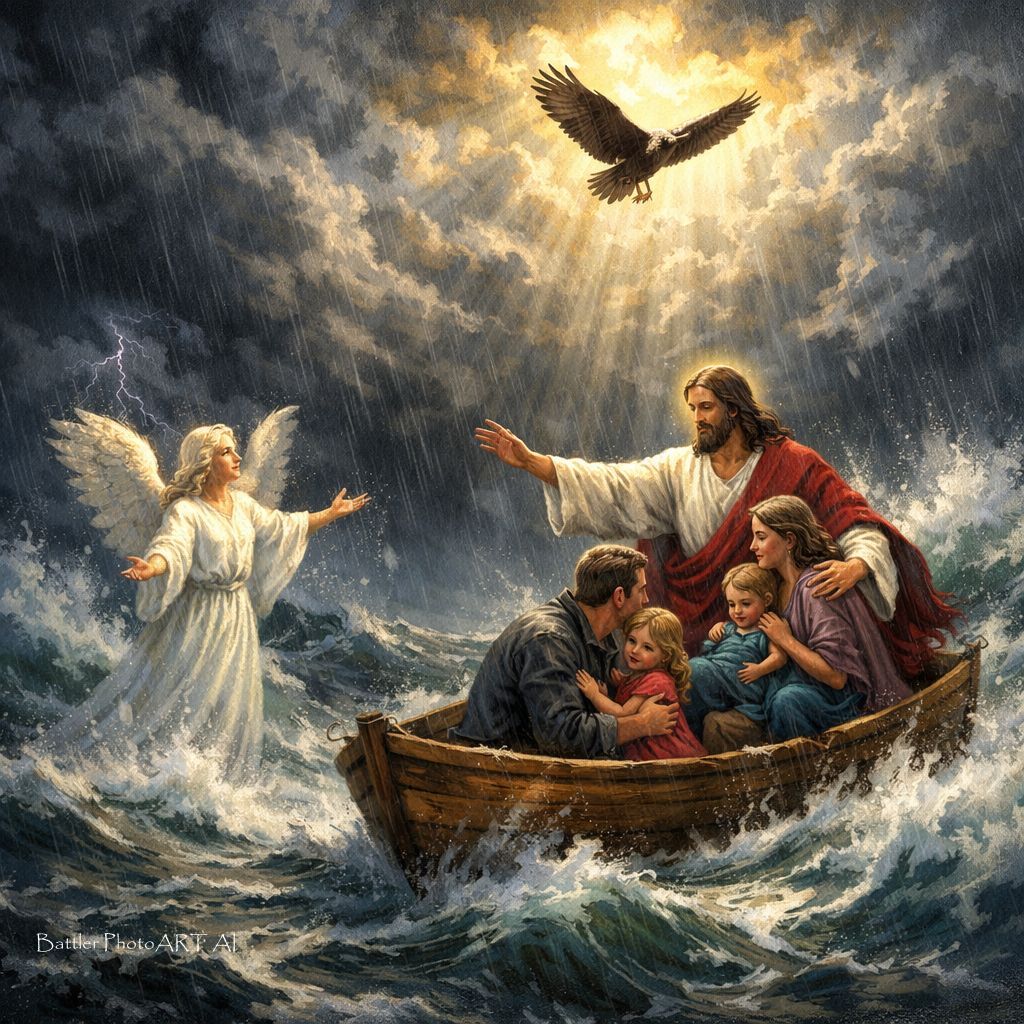
God’s Call Leads Us Straight into Battle

Reading Time: 7 minutes

“And immediately the Spirit drove him into the wilderness.”  Mark 1:12 (KJV)

Phil 2:13
Phil 2:13

Mark’s Gospel is the Gospel of urgency. Over forty times he uses words like “immediately,” “straightway”, and “forthwith”. But nowhere is the word more spiritually charged than here — the moment Christ moves from divine affirmation into direct conflict.

The heavens have just opened. The Father has declared: “Thou art my beloved Son, in whom I am well pleased.” (Mark 1:11) And then, without pause, delay, or recovery, “immediately” the Spirit drives Jesus into the wilderness. Such a transition reveals a consistent biblical pattern: God often permits testing right after revelation.

Divine Approval Followed by Divine Testing

Scripture repeatedly shows that moments of spiritual clarity are often followed by intense trials.

“Beloved, think it not strange concerning the fiery trial which is to try you…” (1 Peter 4:12)

“My brethren, count it all joy when ye fall into various temptations; knowing this, that the trying of your faith worketh patience.” (James 1:2–3)

“After the Lord had spoken unto Moses… the people were sore afraid.” (Exodus 20:18–19)

“Immediately” after the tribulation… shall appear the sign of the Son of man.” (Matthew 24:29–30)

God does not separate calling from refining. He joins them together. This is why we can say “all things work together for good if you love Jesus.” (Rom 8:28) If you love Jesus your eyes are opened so that you can see His providential working in everything. Jesus is led into the wilderness simply because He is God’s Son.

The Spirit Descends in Peace and Drives with Purpose

“The Spirit drives him,” implying forceful, intentional movement. This was not temptation by chance. It was training by design.

“After His baptism, Christ was led by the Spirit into the wilderness to be tempted by Satan. When He was taken into the wilderness to be tempted, He was under the special guidance of God. God did not lead Him into temptation, but the Spirit led Him into the wilderness to be tempted by the devil.”  (DA 114)

“It was the Holy Spirit that led Jesus into the wilderness to be tempted. God suffered His Son to be tried, that humanity might be benefited by His example.” (DA 114)

The wilderness was not abandonment. Being led or driven into the wilderness was preparation for victory on behalf of humanity.

Why the Enemy Attacks Immediately

Notice Satan’s first words in the temptation: “If thou be the Son of God…” (Matthew 4:3) This kind of assault directly targets what God has just spoken. This pattern continues throughout Scripture:

After Israel is called God’s son, Pharaoh intensifies bondage (Exodus 5). After David is anointed king, Saul hunts him down like an animal. (1 Samuel 18–24) After Paul’s conversion, persecution begins at once (Acts 9:20–25).

Establishment of Spiritual Identity Invites Spiritual Attack.

“No sooner does the child of God commit himself to the service of Christ than the powers of darkness are aroused to defeat [them].” SC 71

The closer one walks with God, the more intentional, and aggressive the opposition becomes.

The Wilderness as God’s Classroom

Too often we see our hardship as a detour. As out of place. Or as “exceptional.” Scripture, however, presents it as a necessary stage of our personal, spiritual development.

“I did know thee in the wilderness, in the land of great drought.” (Hosea 13:5)

“Who led thee through that great and terrible wilderness… that He might humble thee, and that He might prove thee.” (Deut 8:15–16)

“Though now for a season, if need be, ye are in heaviness through manifold temptations.” (1 Peter 1:6)

God uses isolation and temptation to deepen our dependence on Him, and to impress us with a greater sense of “the everlasting gospel” as it plays out in “the great controversy”.

“The wilderness was the place of preparation for Christ’s public ministry. In solitude He was to learn the lessons of submission and dependence upon God.” (DA 114)

Where there is success there is danger. Continuous prosperity is not favorable to spirituality. Adversity and disappointment are needed to drive us to God. As the fire purifies the precious metals, so God purifies the hearts of His children by the fiery trial of affliction. Ease and prosperity may lead to forgetfulness of God, and a loss of dependence upon Him; but difficulties and hardships lead men to seek God for strength and support.”

“In times of great spiritual light and privilege, there is danger that self-confidence will be cherished, and that there will not be that careful dependence upon God which there should be. When the Lord is working mightily for His people, there is peril lest they shall take glory to themselves and forget that God is the source of their strength.” (Ev 692)

“When success attends the efforts put forth in the cause of God, there is danger of exalting self, of thinking that we are sufficient of ourselves. We are in constant need of humility and watchfulness.” (Ev 692)

More About “Immediately”

The word “immediately” teaches several spiritual truths:

True Obedience Is Never Delayed

Whenever something is going on, Jesus does not question the Spirit’s leading.  “I delight to do thy will, O my God.” (Psalm 40:8) A true child of God springs into full action when Creator speaks.

God Does Not Waste Spiritual Momentum

Moments of revelation are often like launching pads for our refinement.

The Lord frequently places us in difficult positions to stimulate us to greater exertion. In His providence special annoyances sometimes occur to test our patience and faith. God gives us lessons of trust. He would teach us where to look for help and strength in time of need. Thus, we obtain practical knowledge of His divine will, which we so much need in our life experience. Faith grows strong in earnest conflict with doubt and fear.

You may be a conqueror if you take careful heed to your ways. You should devote your life to the cause of God and pray for success. You should not close your eyes to your danger but should resolutely prepare for every difficulty in your Christian advancement. Take time for reflection and for humble, earnest prayer. Your talents are marked, and you are hopeful regarding your future success; but unless you comprehend the weakness of your natural heart you will be disappointed.  {4T 116.3}

Let the one to whom God gives success in his work, keep on the garments of humility and contrition, if he desires to remain of value in the sight of heaven. Whether he be a successful evangelist, a gifted teacher, a clear writer, let him also be a man of faith, a man of prayer; let him never place human merit where God’s honor should be. Only those who are cleansed from all self-exaltation can become complete in Christ. While the workers keep their eyes fixed on Christ, they are safe. When they lose sight of him, they are in the greatest danger. {RH, October 7, 1909, par. 12}

Persecution is often followed by great results. Success had attended the ministry of the word in Jerusalem, and there was danger that the disciples would linger there too long, forgetful of the Saviour’s commission to go into all the world. They began to think that they had a work to do in Jerusalem in shielding the members of the church from the snares of the enemy, forgetting that strength to resist temptation is best gained by active service.

Instead of educating the new converts to carry the gospel to those who had not heard it, they were in danger of being satisfied with what had been accomplished. To scatter his representatives abroad, where they could work for others, God permitted persecution to come upon his church. Driven from Jerusalem, the believers “went everywhere preaching the word.” Thus began the fulfillment of the prediction of the Savior, “Ye shall be witnesses unto me both in Jerusalem, and in all Judea, and in Samaria, and unto the uttermost part of the earth.” {RH, March 2, 1911, par. 2}

“For whom the Lord loves He chastens.” (Hebrews 12:6) God’s Love disciplines. God’s calling purifies.

Trials Are Often Signs of Advancement, Not Failure

“We must through much tribulation enter into the kingdom of God.” (Acts 14:22)

Hardship is not evidence God has left. Trials and temptations are more often evidence that Creator is working deeply.

For the word of God is alive and active. Sharper than any double-edged sword, it penetrates even to dividing soul and spirit, joints and marrow; it judges the thoughts and attitudes of the heart. (Heb 4:12, NIV)

Encouragement for Believers Facing Sudden Trials

When difficulties rise quickly after prayer, commitment, baptism, or spiritual growth — Mark 1:12 explains why. The Spirit may be strengthening our faith, or increasing our faith, not punishing it.

“The trials of life are God’s workmen to remove the impurities and roughness from our character.” (MB 10)

“Every temptation that is resisted, every trial bravely borne, gives us a new experience and advances us in the work of character building.” (MH 500)

Conclusion

That one word “immediately” efficiently dismantles the false gospel of comfort without conflict.

“Immediately” teaches how that God’s favor does not cancel trials, God’s Spirit sometimes leads into hardship, God’s purpose often unfolds through isolation, pressure, crises, or even persecution.

In fact, everyone who wants to live a godly life in Christ Jesus will be persecuted (2 Tim 3:12)

And yet, we are told how that the same Spirit who drives us into the wilderness sustains us in it. God’s people have the most remarkable testimonies from their wilderness experiences. The same God who allows testing guarantees victory. Jesus entered the wilderness immediately. Jesus emerged from the wilderness in the power and glory of the everlasting gospel.

For I am not ashamed of the gospel, because it is the power of God that brings salvation to everyone who believes: first to the Jew, then to the Gentile. For in the gospel the righteousness of God is revealed. A righteousness that is by faith from first to last, just as it is written: “The righteous will live by faith.” (Rom 1:16-17, NIV)

This is the gospel “power” which all who emerge from the wilderness where they are “immediately” led to will possess. “To all of them who receive Jesus gives He power to be or become the sons and daughters of God.” (John 1:12)

A Growing Understanding of Faith

They also that erred in spirit shall come to understanding, and they that murmured shall learn doctrine.” Isa 29:22-24.  {AA 382.1}

The righteousness of Christ is revealed from faith to faith; that is, from your present faith to an increased understanding of that faith which works by love and purifies the soul (6BC 1067.5)
Waiting In The Ark

Reading Time: 9 minutes

Friends, the message God gave in Noah’s day was simple: Get into the ark.

Judgment is coming.

“As the days of Noe were, so shall also the coming of the Son of man be” (Matthew 24:37).

Rev 14 6 7
Rev 14 6 7

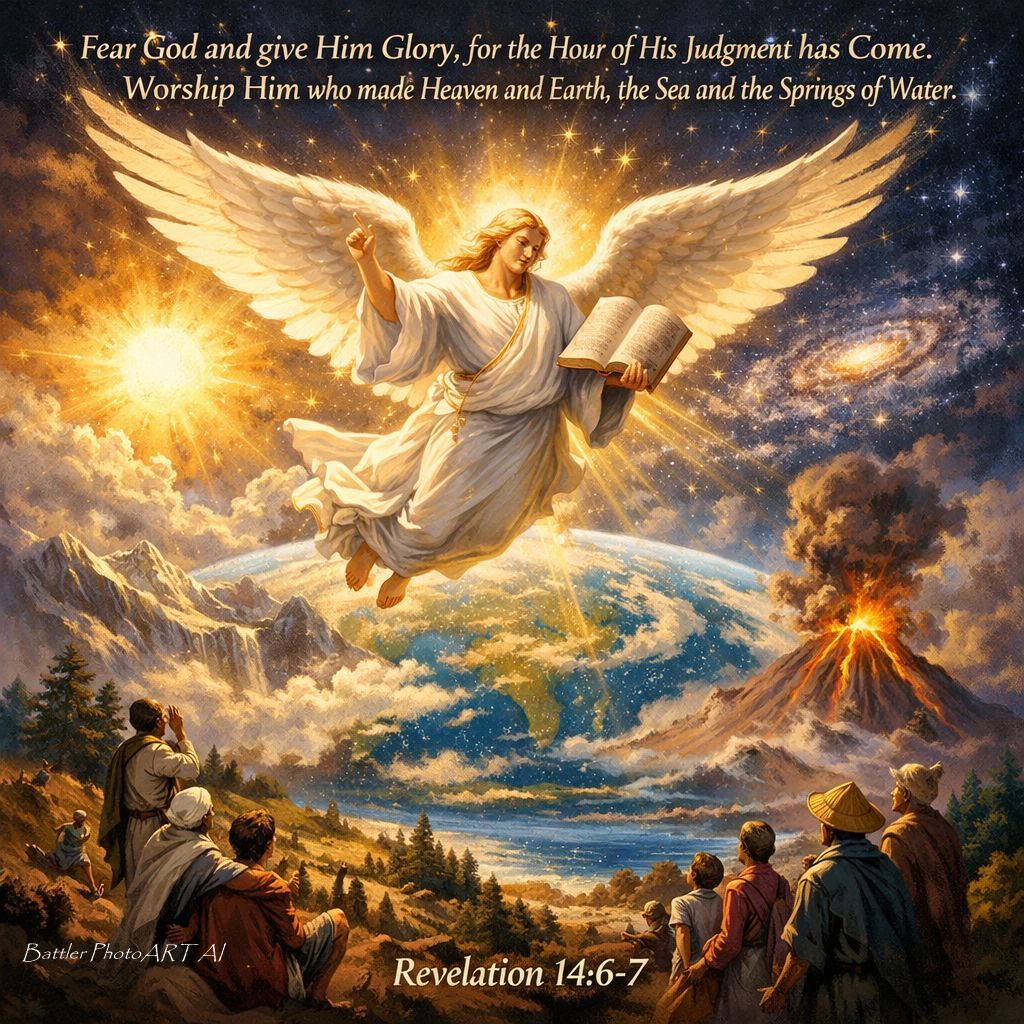
Today, God is again giving a final warning message — through three angels flying in the midst of heaven. The three angels collectively present one message. It is the three angel’s message. (Rev 14:6-12) And that message is for us to get into the “ark” where all of God’s people from all of the churches will find their refuge, and their wisdom for these last days.

“But concerning that day and hour no one knows, not even the angels of heaven, nor the Son, but the Father only. For as were the days of Noah, so will be the coming of the Son of Man. For as in those days before the flood they were eating and drinking, marrying and giving in marriage, until the day when Noah entered the ark,and they were unaware until the flood came and swept them all away, so will be the coming of the Son of Man. (Mat 24:36-39)

The First Angel: Stay in the Ark of Worship and Obedience

“And I saw another angel fly in the midst of heaven, having the everlasting gospel to preach unto them that dwell on the earth, and to every nation, and kindred, and tongue, and people, saying with a loud voice, Fear God, and give glory to him; for the hour of his judgment is come: and worship him that made heaven, and earth, and the sea, and the fountains of waters” (Revelation 14:6–7).

Notice the order: “the everlasting gospel” first. Before God calls the world to fear Him, give Him glory, and worship the Creator in the hour of judgment, He announces the foundation of it all—“the everlasting gospel.” One Bible version, the Murdock version, actually spells it out very well:

And I saw another angel flying in heaven: and with blood, he had the everlasting gospel, to proclaim to dwellers on the earth, and to every nation and tribe and tongue and people; (Rev 14:6, Murdock)

The Three Angel’s Message begins with the shed blood of “Jesus Christ the righteous.” (1 John 2:1)

The first angel’s message means that our end-time waiting is not just about us enduring; it’s about God’s people proclaiming Jesus—His saving grace, His righteousness, His power to keep,(John 1:12) His power to transform, (Rom 12:1-2), His power to save to the uttermost, (Heb 7:25) and His soon return. (John 14:3) Like Noah, we are to live as a people who believe God’s Word, obey God’s voice, and invite others into safety before the door closes.

“…the Spirit and the bride [Church] say, Come. And let him that heareth say, Come. And let him that is athirst come. And whosoever will, let him take the water of life freely. (Rev 22:17)

This is the ark message of our time. (Rev 14:6-12)

Just as Noah called people to trust God’s word over appearances, the first angel calls us to worship the Creator—not according to convenience, or compromise—but according to God’s express command.

Waiting for Jesus means staying faithful in worship when the world has forgotten the Creator. It means honoring Him even when obedience feels costly.It means trusting God’s Word when the evidence around us is confusing. Like Noah, we may see signs—but we wait for and act upon God’s voice.

The Second Angel: Don’t Step Out into Babylon

The second angel follows, saying: “Babylon is fallen, is fallen” (Revelation 14:8).

“I heard another voice from heaven, saying, Come out of her, my people, that ye be not partakers of her sins, and that ye receive not of her plagues.” (Rev 18:4)

Babylon represents confusion—religion mixed with error, truth blended with compromise, safety that looks solid but cannot hold. The earth after the flood looked ready—but it wasn’t. And Babylon today looks acceptable to untold millions,but we know it isn’t.

Waiting for Jesus means refusing to step out of the ark into systems God has declared unsafe. It means not rushing ahead because the world says, “all is well now” God is now through this most precious message calling His people out of Babylon: “Then I heard another voice from heaven saying, “Come out of her, my people, lest you take part in her sins, lest you share in her plagues; (Rev 18:4)

Jeremiah foresaw what the fourth angel of Rev 18:4 is telling us today

Babylon is suddenly fallen and destroyed: howl for her; take balm for her pain, if so be she may be healed. We would have healed Babylon, but she is not healed: forsake her, and let us go every one into his own country: for her judgment reacheth unto heaven, and is lifted up even to the skies. (Jer 51:8-9)

The prophecies in the eighteenth of Revelation will soon be fulfilled. During the proclamation of the third angel’s message, “another angel” is to “come down from heaven, having great power,” and the earth is to be “lightened with his glory.” The Spirit of the Lord will so graciously bless consecrated human instrumentalities that men, women, and children will open their lips in praise and thanksgiving, filling the earth with the knowledge of God, and with His unsurpassed glory, as the waters cover the sea. {7BC 983.9}

Those who have held the beginning of their confidence firm unto the end will be wide awake during the time that the third angel’s message is proclaimed with great power  {7BC 984.1}

God’s people wait—even when the pressure to conform is strong. Because they all choose to “follow The Lamb wherever he goes!” (Rev 14:4)

The Third Angel: Patience The Door Is Still Open

“If any [person] worship the beast and his image…the same shall drink of the wine of the wrath of God” (Revelation 14:9–10).

And immediately after that warning, Scripture describes God’s waiting people:

“Here is the patience of the saints: here are they that keep the commandments of God, and the faith of Jesus” (Revelation 14:12).

This is Noah’s faith in end-time language.

The patience of the saints is not passive.It is commandment-keeping patience.It is faith-filled endurance.
It is staying in the ark while the world mocks, pressures, and rushes.

The fourteenth chapter of Revelation is a chapter of the deepest interest. This scripture will soon be understood in all its bearings, and the messages given to John the revelator will be repeated with distinct utterance {7BC 978.10}

Identifying the Three Angels

Christ is coming the second time, with power unto salvation. To prepare human beings for this event, He has sent the first, second, and third angels’ messages. These angels represent those who receive the truth, and with power open the gospel to the world. {7BC 978.11}

Friends, the door is still open—but it will soon close, Bible prophecy knows neither haste nor delay. And when it closes, no one will step into the ark again.

The history of the early church testified to the fulfillment of the Savior’s words. The powers of earth and hell arrayed themselves against Christ in the person of His followers. Paganism foresaw that should the gospel triumph, her temples and altars would be swept away; therefore she summoned her forces to destroy Christianity. The fires of persecution were kindled. Christians were stripped of their possessions and driven from their homes. They “endured a great fight of afflictions.” Heb 10:32. They “had trial of cruel mockings and scourgings, yea, moreover of bonds and imprisonment.” Heb 11:36. Great numbers sealed their testimony with their blood. Noble and slave, rich and poor, learned and ignorant, were alike slain without mercy. {GC 39.2}

Like Noah, you may see signs.
Like Noah, you may feel confined.
Like Noah, you may wonder why deliverance hasn’t come yet.

The same God who shut Noah in the ark (of truth) is now calling His people out of the sins of Babylon and into the “ark” of truth in the three angel’s message. (Rev 18:4, Rev 14:6-12)

“For yet a little while, and he that shall come will come, and will not tarry” (Hebrews 10:37).

Paul urges us not to cast away our confidence, our confidence in Christ, our confident hope of everlasting salvation in him. He is telling us not to take our eyes off Christ, to let nothing and no one come between us and him. Trials will come upon us. Temptations will assail us. Satan will roar against us. The world will allure us. Those things are certain; but so is this:

“The sufferings of this present time are not worthy to be compared with the glory which shall be revealed in us” (Rom 8:18).

God permits the wicked to prosper and to reveal their enmity against Him, that when they shall have filled up the measure of their iniquity all may see His justice and mercy in their utter destruction. The day of His vengeance hastens, when all who have transgressed His law and oppressed His people will meet the just recompense of their deeds; when every act of cruelty or injustice toward God’s faithful ones will be punished as though done to Christ Himself. {GC 48.2}

There is another and more important question that should engage the attention of the churches of today. The apostle Paul declares that “all that will live godly in Christ Jesus shall suffer persecution.” 2 Tim 3:12. Why is it, then, that persecution seems in a great degree to slumber? The only reason is that the church has conformed to the world’s standard and therefore awakens no opposition. The religion which is current in our day is not of the pure and holy character that marked the Christian faith in the days of Christ and His apostles. It is only because of the spirit of compromise with sin, because the great truths of the word of God are so indifferently regarded, because there is so little vital godliness in the church, that Christianity is apparently so popular with the world. Let there be a revival of the faith and power of the early church, and the spirit of persecution will be revived, and the fires of persecution will be rekindled. {GC 48.3}

Then shall the King say unto them on his right hand, Come, ye blessed of my Father, inherit the kingdom prepared for you from the foundation of the world: (Mat 24:34)

The time of God’s destructive judgments is the time of mercy for those who have no opportunity to learn what is truth. Tenderly will the Lord look upon them. His heart of mercy is touched; His hand is still stretched out to save, while the door is closed to those who would not enter. Large numbers will be admitted who in these last days hear the truth for the first time. {7BC 979.3}

The first angel’s message of Revelation 14, announcing the hour of God’s judgment and calling upon men to fear and worship Him, was designed to separate the professed people of God from the corrupting influences of the world and to arouse them to see their true condition of worldliness and backsliding. In this message, God has sent to the church a warning, which, had it been accepted, would have corrected the evils that were shutting them away from Him. Had they received the message from heaven, humbling their hearts before the Lord and seeking in sincerity a preparation to stand in His presence, the Spirit and power of God would have been manifested among them. The church would again have reached that blessed state of unity, faith, and love which existed in apostolic days, when the believers “were of one heart and of one soul,” and “spake the word of God with boldness,” when “the Lord added to the church daily such as should be saved.” Acts 4:32; Acts 4:31; Acts 2:47. {GC 379.1}

If God’s professed people would receive the light as it shines upon them from His word, they would reach that unity for which Christ prayed, that which the apostle describes, “the unity of the Spirit in the bond of peace.” “There is,” he says, “one body, and one Spirit, even as ye are called in one hope of your calling; one Lord, one faith, one baptism.” Eph 4:3-5. {GC 379.2}

Such were the blessed results experienced by those who accepted the advent message. They came from different denominations, and their denominational barriers were hurled to the ground; conflicting creeds were shivered to atoms; the unscriptural hope of a temporal millennium was abandoned, false views of the second advent were corrected, pride and conformity to the world were swept away; wrongs were made right; hearts were united in the sweetest fellowship, and love and joy reigned supreme. If this doctrine did this for the few who did receive it, it would have done the same for all if all had received it. {GC 379.3}

Revelation 18 points to the time when, as the result of rejecting the threefold warning of Rev 14:6-12, the church will have fully reached the condition foretold by the second angel, and the people of God still in Babylon will be called upon to separate from her communion. This message is the last that will ever be given to the world; and it will accomplish its work. When those that “believed not the truth, but had pleasure in unrighteousness” (2 Thes 2:12), shall be left to receive strong delusion and to believe a lie, then the light of truth will shine upon all whose hearts are open to receive it, and all the children of the Lord that remain in Babylon will heed the call: “Come out of her, My people” (Rev 18:4). {GC 390.2}

Today, God is again giving a final warning message — through three angels flying in the midst of heaven. The three angels collectively present one message. It is the three angel’s message. (Rev 14:6-12) And that message is for us to get into the “ark” where all of God’s people from all of the churches will find their refuge, and their wisdom and God’s truth for these last days.

The Ministry of Silence

Reading Time: 4 minutes

“Be still, and know that I am God. I will be exalted among the nations, I will be exalted in the earth!” (Psalms 46:10)

"be still and know" (Psalms 46:10)
“be still and know” (Psalms 46:10)

“There are certain voices which we never hear except when everything is silent. They reach us as a revelation of the stillness.” Creator wants us to understand Understand that He is the Fountain of power, wisdom, justice, goodness, and truth.

In a world saturated with noise, silence has become rare—and often uncomfortable. We fill our days with conversation, media, and motion, rarely allowing space for stillness. Yet Scripture teaches that some of God’s most profound communications come not through thunder or spectacle, but through quietness. The prophet Elijah learned this when he stood on Mount Horeb, expecting God to appear in dramatic force. Instead, the Lord came in “a still small voice” (1 Kings 19:11–12). The message was clear: divine truth is often whispered, not shouted.

Silence does not mean absence. Rather, it creates the environment in which God’s presence becomes more perceptible. “Be still, and know that I am God” (Psalm 46:10) is both an invitation and a command. Stillness allows the heart to shift from activity to awareness, from striving to surrender. When external noise fades, the soul becomes attentive. Like young Samuel, who heard God’s voice in the quiet of the night (1 Samuel 3:1–10), we discover that spiritual hearing requires more than ears—it requires stillness.

Jesus Himself sought silence. Though surrounded by crowds, demands, and suffering, He withdrew to solitary places to pray (Mark 1:35; Luke 5:16). In those moments of quiet communion, His mission was strengthened and His purpose clarified. Silence was not escape; it was alignment. The Father’s voice did not compete with the noise of the world—it met Jesus in the stillness.

In a life wholly devoted to the good of others, the Savior found it necessary to turn aside from ceaseless activity and contact with human needs, to seek retirement and unbroken communion with His Father. As the throng that had followed Him depart, He goes into the mountains, and there, alone with God, pours out His soul in prayer for these suffering, sinful, needy ones…. All who are under the training of God need the quiet hour for communion with their own hearts, with nature, and with God. In them is to be revealed a life that is not in harmony with the world, its customs, or its practices; and they need to have a personal experience in obtaining a knowledge of the will of God. We must individually hear Him speaking to the heart.

When every other voice is hushed, and in quietness we wait before Him, the silence of the soul makes more distinct the voice of God. He bids us, “Be still, and know that I am God.” This is the effectual preparation for all labor for God. Amidst the hurrying throng, and the strain of life’s intense activities, he who is thus refreshed, will be surrounded with an atmosphere of light and peace. He will receive a new endowment of both physical and mental strength. His life will breathe out a fragrance, and will reveal a divine power that will reach men’s hearts. (MH 58).

In the midst of our maddening rush, God is speaking. He bids us come apart and commune with Him…. Not a pause for a moment in His presence, but personal contact with Christ, to sit down in companionship with Him—this is our need. (Education 260,261).

There are also voices within us that only emerge when everything grows quiet. Conviction, comfort, and spiritual clarity often rise in silence. “It is good that one should hope and wait quietly for the salvation of the Lord” (Lamentations 3:26). When distractions fall away, the Holy Spirit speaks to the conscience, reminding us of truth, correcting our course, and reassuring our hearts (John 16:13). These are not loud voices, but they are unmistakably real.

Silence, then, becomes more than a pause—it becomes a revelation. Isaiah writes, “In quietness and in confidence shall be your strength” (Isaiah 30:15). Strength is not always found in activity; sometimes it is discovered in stillness. In the hush of prayer, in the calm of reflection, and in the sacred quiet of trust, God’s voice reaches us—not with force, but with peace.

There are voices we will never hear amid constant motion. They wait for the soul to be still. And when everything grows quiet, those voices do not merely speak—they reveal. Every silence has a voice. Every silence contains a personal message from Creator.

Finally, silence reveals spiritual truths that noise often conceals. It teaches patience, humility, and dependence on God above our own understanding. As we wait quietly before Him, our inner distractions fall away, and the “voices” of conviction, comfort, and direction become recognizable. In the midst of life’s chaos, the stillness of God’s presence becomes both refuge and revelation—an invitation to listen, to know, and to be transformed.

Reflection Questions

What “voices” in your life crowd out your ability to hear God’s voice?

How can you create intentional times of stillness in your daily rhythm?

In what ways has silence brought you closer to God?

Precious Showers of Blessing

Reading Time: 4 minutes

“I will cause the shower to come down in his season; there shall be showers of blessing” (Ezekiel 34:26)

showers Ezekiel 34:26

What is your season this morning my friend? Is it a season of drought? Then that is the season for showers. “As your day is, so shall your strength be” (Deut 33:25) “I will give you showers of blessing” (Ezekiel 34:26) Notice here that the word is in the plural. All kinds of showers. All kinds of blessings. God wants to gift us with everything that we need for salvation. God has given us His Son that we might be saved. (John 3:16) And all of God’s showers and blessings go together. Like links in a golden chain. Like the rungs in our own “Jacob’s ladder.” (Gen 28:12)

Jesus is the living ladder that connects earth to heaven. God invites us to climb, not by our own strength, but by trusting Him step by step. Each rung of that ladder represents a promise from God. We cannot climb while clinging to worldly weights—comfort, possessions, or self-interest—because faith requires release as well as effort. When we place our personal advantage ahead of God, we slow our own spiritual growth. Earthly success cannot save us or lift us closer to heaven. God does not measure greatness by wealth or status, but by trust and obedience. {paraphrased from 1BC 1095.2}

As we grow in our walk with God, we learn that every upward step means leaving something behind and resting more fully on His promises. We climb safely only when our feet are firmly planted on each promise God has spoken. We do not rush upward; we step carefully, trusting that each promise will hold us. {1BC 1095.2}

Today my friends, it is God’s express will that “…grace and peace be multiplied to you in the knowledge of God and of Jesus our Lord. His divine power has granted to us all things that pertain to life and godliness, through the knowledge of him (John 17:3) who called us to his own glory and excellence,by which he has granted to us his precious and very great promises, so that through them you may become partakers of the divine nature, having escaped from the corruption that is in the world because of sinful desire. (2 Pet 1:2-4)

In one of my favorite books that deals with end time events, I read the following:

“We should NOW acquaint ourselves with God by proving His promises.” (Great Controversy, pg 632)

God personally stands behind all of His promises. “Promises are estimated by the truth of the one who makes them. Many men make promises only to break them, to mock the heart that trusted in them. Those who lean upon such men lean upon broken reeds. But God is behind the promises He makes. He is ever mindful of His covenant, and His truth endureth to all generations.” {7BC 942.12}

The Bible says that when our Creator God gives converting grace. God will also give comforting grace. (Rom 12:1-2) Our heavenly Father will send “showers of blessings!” Creator will infuse the strength we need into our weakness. Our Father which art in Heaven will rain down His love mercy and grace into your life and soul, according to your present felt needs. Does your life seem like a parched plant today? Wilting under the heat of trials and grief? Have you considered having a personal, lived experience in the “things that accompany salvation?” (Heb 6:9) Expect the rain. Welcome the showers in your life whenever our Father sees fit to send them.

For the earth which drinketh in the rain that cometh oft upon it, and bringeth forth herbs meet for them by whom it is dressed, receiveth blessing from God: But that which beareth thorns and briers is rejected, and is nigh unto cursing; whose end is to be burned. But, beloved, we are persuaded better things of you, and things that accompany salvation, though we thus speak. (Heb 6:7-9)

Look up to Jesus, O parched plant. Open up your leaves and flowers for the Heavenly watering. It is “with great joy that you will draw waters from the well of salvation.” (Isa 12:3) Our mighty Creator God can transform any thorn into a flower. Don’t you want your thorn turned into a beautiful flower?

You know friends, Job got the sunshine after the rain. But was all that stormy rain a waste? Could it be that those showers had something to do with the shining? Doesn’t the fruitful life seek both the showers and the sunshine? Only you can answer this question. Only the cross that you daily bear can answer the question.

Your grief, your sorrow, your tragedy and your loss have crowned your gross darkness because you have learned to seek and find the beautiful radiance of the stormy rains. May your dark clouds reflect the light in your clouds, as the showers of eternal blessings rain down on you from every direction.

In contrast to the present evil shepherds (leaders) of God’s people (Ezekiel 34:1-6), God will send a perfect shepherd, the Messiah (Ezekiel 37:25), who will take care of every need his people have and set up a Kingdom of perfect peace and justice. (Heb 13:20-21). Peace here means more than the absence of conflict. It is contentment, fulfillment, and security.

Let those who are oppressed under a sense of sin remember that as long as they are alive there is hope for them. (Eccl 9:4-6) The salvation of the human race has ever been the object of the councils of heaven. The covenant of mercy was made before the foundation of the world. It has existed from all eternity, and is called the everlasting covenant. So surely as there never was a time when God was not, so surely there never was a moment when it was not the delight of the eternal mind to manifest His grace to humanity. {7BC 934.25}

Now may the God of peace who brought again from the dead our Lord Jesus, the great shepherd of the sheep, by the blood of the eternal covenant, equip you with everything good that you may do his will, working in us that which is pleasing in his sight, through Jesus Christ, to whom be glory forever and ever. Amen. (Heb 13:20-21)

There Is Light in Every Cloud. Expect It

As the rain and the snow come down from heaven, and do not return to it without watering the earth and making it bud and flourish, so that it yields seed for the sower and bread for the eater,  so is my word that goes out from my mouth: It will not return to me empty, but will accomplish what I desire and achieve the purpose for which I have sent it” (Isa 55:10-11)

Concerning The Word of Life

Reading Time: 13 minutes

Concerning the Word of Life

In him was life, and the life was the light of men.  (John 1:4, 1 John 1:1–4)

"He cares for you...(1 Pet 5:7)
“He cares for you…(1 Pet 5:7)

The Word of Life: Not an idea, but a Person

Notice how John does not begin his epistle with an argument. He begins with a testimony.

“That which was from the beginning, which we have heard, which we have seen with our eyes, which we have looked upon, and our hands have handled, concerning the Word of life…” (1 John 1:1-3)

Before John gives us doctrine, he gives us personal “encounter”.

Before he gives explanation, he gives in person, lived “experience”.

Christianity, John insists, is not built on rumor, philosophy, or religious speculation. It is built on personal contact with a living Christ.

John is saying: “We did not merely hear about God—we met Him in person.” “We are bearing testimony to what we saw.” (1 John 1:1-3, Rev 12:11)

One Christian writer captures this same conviction when she writes:

Christ came to represent the Father to man. He revealed the nature of God to the world. Satan had misrepresented the father. He had pictured him as a being full of revenge, who had no forbearance, no mercy, no patience, no love. He clothed him with his own attributes; but Christ came, and took upon him humanity, that he might reveal to humanity the true character of the Father; and we are to represent Christ to the world as Christ represented the Father.  {RH, April 30, 1889, par. 8} 

“The Word” — God Made Known

When John uses the word “Word”, he is drawing us back to creation itself:

“In the beginning was the Word…” (John 1:1)

In Scripture, God’s Word is not just an audio only, God’s Word is “action”, God’s Word is “power”, God’s Word is “self-disclosure” God speaks, and worlds appear. God speaks, and light breaks apart the darkness.

But now John tells us something astonishing: “The Word stepped into human history.”

This is what one writer declares:

“In Christ is life, original, unborrowed, underived.” (DA 530}

“In him was life; and the life was the light of humanity” (John 1:4). It is not physical life that is here specified, but immortality, the life which is exclusively the property of God. The Word, who was with God, and who was God, had this life. Physical life is something which everyone receives. It is not eternal or immortal; for God, the Life-giver, takes it again. Man has no control over his life.

But the life of Christ was unborrowed. No one can take this life from Him. “I lay it down of myself” (John 10:18), He said. In Him was life, original, unborrowed, underived. This life is not inherent in [humanity]. [We] can possess it only through Christ. [We] cannot earn it; it is given [us] as a gift if [we] will believe in Christ as [our] personal Savior.

“This is life eternal, that they might know thee the only true God, and Jesus Christ, whom thou hast sent” (John 17:3). This is the open fountain of life for the world.  {1SM 296.2}

Jesus did not live a borrowed life.

Jesus did not delegate His life.

Jesus did not live any symbolic life.

Jesus lived “God’s own life” walking among us. The Bible tells us, “In Him was life and the life was the light of humanity.” (John 1:4) This is in part why the Bible calls Jesus “Immanuel, God with us.” (Mat 1:23)

“In Him was life; and the life was the light of men.” It is not physical life that is here specified, but eternal life, the life which is exclusively the property of God. The Word, who was with God, and who was God, had this life. Physical life is something which everyone receives. It is not eternal or immortal; for God, the Life giver, takes it again.

Humanity has no control over their existence. But the life of Christ was unborrowed. No one can take this life from Jesus. ” The Father loves me because I give my life. I give my life so that I can get it back again. No one takes my life away from me. I give my own life freely. I have the right to give my life, and I have the right to get it back again. This is what the father told me.”  (John 10:17-18) he said.

In Him was life, original, unborrowed, underived. This life is not inherent in man. He can possess it only through Christ. He cannot earn it; it is given him as a gift if he will believe in Christ as his personal Savior. “This is life eternal, that they might know thee the only true God, and Jesus Christ, whom thou hast sent.” John 17:3. This is the open fountain of life for the world.  {5BC 1130.3}

Thus, when John says the phrase, “concerning the Word of life,” he means:

“We are speaking about God Himself, personally present.”  “We are sharing with you our personally lived testimony!” His name shall be called Immanuel, God with us.” “The light of the knowledge of the glory of God” is seen “in the face of Jesus Christ.” From the days of eternity, the Lord Jesus Christ was one with the Father; He was “the image of God,” the image of His greatness and majesty, “the outshining of His glory.” It was to manifest this glory that He came to our world. To this sin-darkened earth He came to reveal the light of God’s love, –to be “God with us.” Therefore, it was prophesied of Him, “His name shall be called Immanuel.”  {DA 19.1} 

“Of Life” — Not Just Informatics, but Vitality

Notice carefully: John does not say “a word about life” but calls it “the Word of life”. Recall how we are told now that “the life was the light of humanity…” (John 1:4)

“Life” is not merely something Jesus teaches. “Life” is WHO Jesus “is”.

John makes this unmistakably clear:

“The life was manifested, and we personally have seen it…”

The Life of Christ became visible.

The Life of Christ became audible.

The Life of Christ became touchable.

“Christ is life itself. He who passes from death to life becomes a partaker of the divine nature. Eternal life is Christ Himself. ‘He that hath the Son hath life.’ (1 John 5:11-12) The life of Christ is communicated to the believer through faith, and this life is to be maintained by faith. Thus, we live by faith, and not by sight.” (FLB 131)

That means eternal life is not just about “length of days”, but “depth of relationship”. Jesus wants us to add “life” to our years, and not necessarily years to our life. And this is how we can say “Heaven begins on Earth.”

No one can be a successful soul winner till [they themselves have] settled the question of surrender to God. We are individually to put on the Lord Jesus Christ. To each one of us He must become wisdom, righteousness, sanctification, and redemption. When our faith lays hold upon Christ as our personal Savior, we shall place Him before others in a new light. And when the people behold Christ as He is, they will not wrangle over doctrines; they will flee to Him for pardon, purity, and eternal life. {CEv 61.3}

Though these three men, Noah, Daniel, and Job, were in it, they should deliver but their own souls by their righteousness, saith the Lord GOD.

Though Noah, Daniel, and Job, were in it, as I live, saith the Lord GOD, they shall deliver neither son nor daughter; they shall but deliver their own souls by their righteousness. (Ezekiel 14:14, Ezekiel 14:20)

“To know Christ is to have eternal life. The value of a man is estimated in heaven according to the capacity of the heart to know God. This knowledge is the spring from which all power flows. God created man that every faculty might be capable of enlargement; and it is His design that the divine attributes shall be revealed in the human being. Then the court of heaven will recognize [humanity] as a coworker with God.” (John 17:3, Jer 9:23-24, DA 388)

Friends, eternal life does not begin at the resurrection—it begins at “conversion,” and that is the only way we can say:” Heaven begins here on earth.”

Seen, Heard, touched — Faith Rooted in Reality

John describes Jesus by framing Him with a very expressive language

We want to tell you about the Word that gives life—the one who existed before the world began. This is the one we have heard and have seen with our own eyes. We saw what he did, and our hands touched him.  Yes, the one who is life was shown to us. We saw him, and so we can tell others about him. We now tell you about him. He is the eternal life that was with God the Father and was shown to us.  We are telling you about what we have seen and heard because we want you to have fellowship with us. The fellowship we share together is with God the Father and his Son Jesus Christ. (1 John 1:1-3):

The Life of Christ is heard

The Life of Christ is seen

The Life of Christ is looked upon

The Life of Christ is handled

Why? Because false teachers were already claiming Jesus was not truly human. (John 1:11, John 3:32)

John responds: “But we touched Him.” (1 John 1:1-3)

John did not experience mystical vapor.

John did not experience a spiritual illusion.

John did experience an “incarnate reality”.

The following quote gives us further directions:

“The life of Christ that gives life to the world is in His word. It was by His word that Jesus healed disease and cast out demons; by His word He stilled the sea and raised the dead; and the people bore witness that His word was with power. He spoke the word of God, as He had spoken through all the prophets and teachers of the Old Testament. The whole Bible is a manifestation of Christ, and the Savior desired to fix the faith of His followers on the word. When his visible presence should be withdrawn, the word must be their source of power. Like their Master, they were to live “by every word that proceeded out of the mouth of God.” Matthew 4:4. DA 390.3}

The Word that originally created life is currently seeking to “recreate life”. Jesus is in the active business of transforming the erring humanity that has long been beleaguered by the ravages of sin

Don’t change yourselves to be like the people of this world but let God change you inside with a new way of thinking. Then you will be able to understand and accept what God wants for you. You will be able to know what is good and pleasing to him and what is perfect. (Rom 12:2, ERV)

By coming to dwell with us, Jesus was to reveal God both to men and to angels. He was the Word of God, –God’s thought made audible. In His prayer for His disciples He says, “I have declared unto them Thy name,”–“merciful and gracious, long-suffering, and abundant in goodness and truth,”–“that the love wherewith Thou hast loved Me may be in them, and I in them.” But not alone for His earthborn children was this revelation given. Our little world is the lesson book of the universe. God’s wonderful purpose of grace, the mystery of redeeming love, is the theme into which “angels desire to look,” and it will be their study throughout endless ages.

Both the redeemed and the unfallen beings will find in the cross of Christ their science and their song. It will be seen that the glory shining in the face of Jesus is the glory of self-sacrificing love. In the light from Calvary it will be seen that the law of self-renouncing love is the law of life for earth and heaven; that the love which “seeks  not her own” has its source in the heart of God; and that in the meek and lowly One is manifested the character of Him who dwelleth in the light which no man can approach unto.  {DA 19.2}

The same Christ who calmed storms and raised the dead still speaks life into broken souls today.

The Purpose: Fellowship, Not Mere Belief

John tells us clearly why the Word of life is proclaimed:

“That which we have seen and heard we declare to you, that you also may have fellowship with us; and truly our fellowship is with the Father and with His Son Jesus Christ.”

The goal of the gospel is not just forgiveness.

The goal of the gospel is not just correctness.

The goal of the gospel is not just church membership.

It is “fellowship” with Creator.

“In every human being He discerned infinite possibilities. He saw [people] as they might be, transfigured by His grace–in “the beauty of the Lord our God.” Psalm 90:17, 2 Cor 5:17). Looking upon them with hope, He inspired hope. Meeting them with confidence, He inspired trust. Revealing in Himself man’s true ideal, He awakened, for its attainment, both desire and faith. In His presence souls despised and fallen realized that they still were men, and they longed to prove themselves worthy of His regard. In many a heart that seemed dead to all things holy, were awakened new impulses. To many a despairing one there opened the possibility of a new life.  {Ed 80.1}

Christ bound them to His heart by the ties of love and devotion; and by the same ties He bound them to their fellow men. With Him love was life, and life was service. “Freely ye have received,” He said, “freely give.” Matthew 10:8. Ed 80.2}

It was not on the cross only that Christ sacrificed Himself for humanity. As He “went about doing good” (Acts 10:38), every day’s experience was an outpouring of His life. In one way only could such a life be sustained. Jesus lived in dependence upon God and communion with Him. To the secret place of the Highest, under the shadow of the Almighty, men now and then repair; they abide for a season, and the result is manifest in noble deeds; then their faith fails, the communion is interrupted, and the lifework marred. But the life of Jesus was a life of constant trust, sustained by continual communion; and His service for heaven and earth was without failure or faltering.  {Ed 80.3}

As a man He supplicated the throne of God, till His humanity was charged with a heavenly current that connected humanity with divinity. Receiving life from God, He imparted life to men.  {Ed 80.4}

The Word of life restores what sin destroyed, which was “relationship”. Jesus came to restore relationship. And to all of them that receive Him gave He power to be the sons and daughters of God.” (John 1:12)

We are not merely saved “from” something; we are saved “into” something: “living, personal communion with God”. We are admonished in Scripture:

Trust in him always; ye people, pour out your heart before him: God is a refuge for us. Psalm 62:8

The perception of God’s love works the renunciation of selfishness. In calling God our Father, we recognize all His children as our brethren. We are all a part of the great web of humanity, all members of one family. In our petitions we are to include our neighbors as well as ourselves. No one prays aright who seeks a blessing for himself alone.  {LHU 45.5}

The infinite God, said Jesus, makes it your privilege to approach Him by the name of Father. Understand all that this implies. No earthly parents ever pleaded so earnestly with an erring child as He who made you will plead with the transgressor. No human, loving interest ever followed the impenitent with such tender invitations. God dwells in every abode; He hears every word that is spoken, listens to every prayer that is offered, tastes the sorrows and disappointments of every soul, regards the treatment that is given to father, mother, sister, friend, and neighbor. He cares for our needs, and His love and mercy and grace are continually flowing to satisfy our needs.  {LHU 45.6}

But if you call God your Father, you acknowledge yourselves His children, to be guided by His wisdom and to be obedient in all things, knowing that His love is changeless. You will accept His plan for your life. As children of God, you will hold His honor, His character, His family, His work, as the objects of your highest interest. It will be your joy to recognize and honor your relation to your Father and to every member of His family. You will rejoice in doing any act, however humble, that will tend to His glory or to the well-being of your kindred (MB 104-106).

The Result of Communion with Creator: Fullness of Joy

John ends his opening paragraph with a stunning purpose statement:

“These things we write to you that your joy may be full.” (John 1:4)

Communion with Jesus is not shallow happiness.

Communion with Jesus not emotional excitement.

Communion with Jesus is deep, settled, resilient joy.

We are warned time and time again against a superficial gospel:

“The religion of Christ means more than the forgiveness of sin; it means taking away our sins and filling the vacuum with the graces of the Holy Spirit.” (COL 419)

The Word of life does not merely remove our guilt, rather, the Word actively fills our “emptiness”.  Christianity, when truly lived, cannot be lifeless.

The life of Abraham, the friend of God, was a life of prayer. Wherever he pitched his tent, close beside it was built an altar, upon which sacrifice was offered the morning and evening. When his tent was removed, the altar remained. And the roving Canaanite, as he came to that altar, knew who had been there; and when he had pitched his tent, he repaired the altar and worshiped the living God.  {ML 35.2}

And the Lord appeared unto Abram, and said, unto thy seed will I give this land: and there built he an altar unto the Lord, who appeared unto him. And he removed from thence unto a mountain on the east of Bethel, and pitched his tent, and there he built an altar unto the Lord, and called upon the name of the Lord. Genesis 12:7, 8 

Creator God Welcomes Us to His Audience Chamber

We come to God by special invitation, and He waits to welcome us to His audience chamber. The first disciples who followed Jesus were not satisfied with a hurried conversation with Him by the way; they said, “Rabbi, . . . where dwellest Thou? . . . They came and saw where He dwelt, and abode with Him that day.” John 1:38, 39. So we may be admitted into closest intimacy and communion with God. “He that dwelleth in the secret place of the Highest shall abide under the shadow of the Almighty.” Psalm 91:1. Let those who desire the blessing of God knock and wait at the door of mercy with firm assurance, saying, For Thou, O Lord, hast said, “Everyone that asks receives; and he that seeks finds; and to him that knocks it shall be opened.”(MB 131.)

The Word of Life as Seen Today

John’s personal testimony resounds all down through the ages to this very day to become our personal calling.

He says, “We declare what we have experienced.” My friends, this is just how the gospel advances today.

“The strongest argument in favor of the gospel is a loving and lovable Christian.” (MH 470)

The Word of life is now seen in patience under suffering

The Word of life is now seen in kindness under pressure

The Word of life is now seen in hope that survives grief

The Word of life is now seen at the ready to respond to all manner of tragedy, natural disaster,

The Word of life is now seen responding to all demonic forces that surround every soul.

Living within you is the Christ who floods you with the expectation of glory! This mystery of Christ, embedded within us, becomes a heavenly treasure chest of hope filled with the riches of glory for his people, and God wants everyone to know it! (Col 1:7)

“It is the life of Christ in the soul that is the distinguishing characteristic of the true Christian.” (C.O.L. 312)

Our Invitation

Church, John is not asking us merely to “agree” with the Word of life.

Jesus is inviting us to receive Him

Jesus is inviting us to know Him

Jesus is inviting us to walk with Him

Jesus is inviting us to reflect Him

Arise, shine, for your light has come, and the glory of the LORD has risen upon you. For behold, darkness shall cover the earth, and thick darkness the peoples; but the LORD will arise upon you, and his glory will be seen upon you. And nations shall come to your light, and kings to the brightness of your rising. (Isa 60:1-3)

By grace, through faith, the Word of life still speaks.

By grace, through faith, the Word of life still restores.

By grace, through faith, the Word of life still brings joy.

My precious friends, that life that is the light of humanity today is offered again each day, not as dry theory, but a model of “living fellowship with Jesus Christ.

“He who has the Son has life.” (1 John 5:12)

Each to Give Their Measure of Light

Every shining star which God has placed in the heavens obeys His mandate and gives its distinctive measure of light to make beautiful the heavens at night; so, let every converted soul show the measure of light committed to him; and as it shines forth the light will increase and grow brighter. Give out your light, . . . pour forth your beams mirrored from heaven. O daughter of Zion, “Arise, shine; for thy light has come, and the glory of the Lord is risen upon thee” 4BC 1153.3}

By living a life of devotion and self-sacrifice in doing good to others, you might have been adding stars and gems to the crown that you will wear in heaven, and laying up unfading, eternal treasures (MS 69, 1912).  {4BC 1174.1}

Even When I Am Afraid

Reading Time: 4 minutes

Even When I Am Afraid

“When I am afraid, I put my trust in you.” (Psalm 56:3)

Luke 4:10
Luke 4:10

Creator, whenever there seems to be a good reason for fear, help me to trust you. Help all who read this message to trust you.

“I will trust” are words of abiding confidence, even in times of distress. Alternating passages of pain and faith are a characteristic of most people’s lives. But Jesus has the ultimate peace plan for the wildest storms we may encounter. Jesus is our peace. Jesus is our wisdom. Jesus is our strength. Jesus is our everything. (Eph 2:13-14)

“When I am afraid, I put my trust in you” (Psalm 56:3) is not the denial of fear; it is the decision of faith made in the presence of fear. Scripture is honest about the human experience—our lives often move in alternating passages of pain and confidence, lament and hope. True faith does not cancel distress; it anchors us while the storm still rages. To say “I will trust” is to place the weight of the heart on God when the ground beneath us feels unstable.

As another verse affirms,

“Even though I walk through the valley of the shadow of death, I will fear no evil, for you are with me.” (Psalm 23:4)

It is a quiet, determined act—choosing confidence in God’s character when circumstances give us every reason to tremble.

“That he might be just and the Justifier of the one who has faith in Jesus.” (Romans 3:26)

“Faith is trusting God—believing that He loves us and knows best what is for our good.” (Education, p. 253)

Trust grows not by escaping fear, but by walking directly into it—with God. Another promise steadies us:

“Nothing can happen to us except what is permitted by our heavenly Father. All that He permits is necessary for our discipline and development.”
(Thoughts from the Mount of Blessing, p. 71)

Scripture echoes this assurance:

“Fear not, for I am with you; be not dismayed, for I am your God.” (Isaiah 41:10)

When fear rises, we return—again and again—to this simple resolve: I will trust. In that repeated choice, faith matures, faith strengthens, and the soul learns the secret of rest in Christ even while the storm continues.

Jesus identifies with us by entering fully into our experience. Ellen White states this without softening the truth:

“He was treated as we deserve, that we might be treated as He deserves. He was condemned for our sins, in which He had no share, that we might be justified by His righteousness, in which we had no share.”
(The Desire of Ages, p. 25)

Imagine it—Jesus right there with you in your storm.

Another picture of trust appears in the storm on the Sea of Galilee:

“But he was in the stern, asleep on the cushion.” (Mark 4:38)

The disciples panicked while Jesus rested—not because the storm was unreal, but because His confidence in the Father was deeper than the waves. Their cry sounds familiar:

“Teacher, do you not care that we are perishing?”

One Christian writer describes the moment with striking clarity:

“The disciples could not believe that He was asleep. But Jesus was asleep. He was not disturbed by the storm, because He had no fear. He rested in the Father’s love.” (The Desire of Ages, p. 336)

And she adds:

“In every stormy wind there is a lull; in every night a star.” (The Desire of Ages, p. 336)

Jesus in that storm reminds us that God’s nearness does not vanish when fear is loudest.

“We have nothing to fear for the future, except as we shall forget the way the Lord has led us, and His teaching in our past history.”
(Life Sketches, p. 196)

Friends, when the sea is rough and God seems silent, faith learns a deeper lesson—to rest in who He is, not in what we feel.

God’s Word still calls us to that rest:

“Be still, and know that I am God.” (Psalm 46:10)

“Peace I leave with you; my peace I give to you. Not as the world gives do I give to you. Let not your hearts be troubled, neither let them be afraid.” (John 14:27, ESV)

Jesus did not still the storms of life by drawing on a hidden advantage unavailable to humanity. He trusted the Father as we are invited to trust.

“When I am afraid, I put my trust in you.” (Psalm 56:3)

Thus we see fulfilled the prophetic word:

“The Lord God helps me; therefore I have not been disgraced.” (Isaiah 50:7)

And again we are reminded:

“We have nothing to fear for the future, except as we shall forget the way the Lord has led us.” (Life Sketches, p. 196)

The calm Christ found in the Father’s care during His earthly storms is the same calm He now offers to all who learn to rest their lives in God’s hands.

Prayer

Creator God, Everlasting Father, I come to You in the middle of my own storm—not pretending the winds are gentle or the waves are small, but choosing, like Jesus in the boat, to rest my life in Your promises. When fear rises in me, I claim Your word:

“When I am afraid, I put my trust in you.” (Psalm 56:3)

And again:

“When I sit in darkness, the Lord will be a light to me.” (Micah 7:8)

Father, teach my heart what it means to trust as fully as Christ trusted You. Help me remember that You are near, that You are faithful, and that You have not failed me in the past, for You have said:

“The Lord God helps me; therefore I have not been disgraced.” (Isaiah 50:7)

Quiet the anxious thoughts that roar louder than the storm itself. Grant me the deep, unshakable peace that allowed Jesus to sleep while the waves crashed around Him. Let my confidence rest not in calm circumstances, but in Your steadfast love. Anchor me in the assurance that You are present, You are good, and You are still speaking peace over the stormy waters of my life.

Teach me to rest—not because the storm has passed, but because You are with me in it.

Until You Bless Me

Reading Time: 3 minutes

Genesis 32:26 (NET) Then the man said, “Let me go, for the dawn is breaking.” “I will not let you go,” Jacob replied, “unless you bless me.”

angel of the Lord is with you (Gen 24:40)

Today’s call is for serious, intentional  effort to work with God in knowing His will. Hearing His Voice.

In this text we learn that real strength to resist evil comes from persistent prayer, self-denial, and refusing to give in to comfort or self-indulgence, which can quietly dull our conscience.

True peace doesn’t come from avoiding struggle but from engaging it—growth and victory in Jesus require effort.

Using Jacob’s nighttime wrestling with God as an example, we see that perseverance matters more than brute strength.

Jacob didn’t win by overpowering God but by refusing to let go, even when he was weak and broken. We must similarly, wrestle with God in prayer.

Jacobs transformation came through humility, dependence, and determined faith, not self-reliance. Today’s message urges sustained, focused commitment and faith in Christ.

All night Jacob wrestled with the Angel. Finally the strong wrestler was weakened by a touch on his thigh. He was now disabled and suffering the keenest pain, but he would not loose his hold. All penitent and broken, he clung to the Angel, . . . pleading for a blessing. He must have the assurance that his sin was pardoned. His determination grew stronger, his faith more earnest and persevering, until the very last. The Angel tried to release Himself; He urged, “Let me go, for the day breaketh,” but Jacob answered, “I will not let thee go, except thou bless me.” {CTr 89.4}

Had this been a boastful, presumptuous confidence, Jacob would have been instantly destroyed; but his was the assurance of one who confesses his own unworthiness, yet trusts to the faithfulness of a covenant-keeping God.

Through humiliation, repentance, and self-surrender this sinful, erring mortal prevailed with the Majesty of heaven. He had fastened his trembling grasp on the promises of God, and the heart of infinite love could not turn away the sinner’s plea. {CTr 89.5}

As an evidence that Jacob had been forgiven, his name was changed from one that was a reminder of his sin to one that commemorated his victory. “Thy name,” said the Angel, “shall be called no more Jacob, but Israel: for as a prince hast thou power with God and with men, and hast prevailed.” {CTr 89.6}

Shall we obtain strength from God, and win victory after victory, or shall we try in our own strength, and at last fall back defeated, worn out by vain efforts? Let us, by unreserved surrender to God, obtain the power that everyone must have who conquers in the battle against evil. {CTr 89.7}

Time is short, Christ’s return is near, and overcoming spiritual challenges does not need ease or passivity but rather, requires wholehearted dedication, discipline, and trust in God.

Don’t let Him go until He blesses you! Don’t let Jesus go until He can bless all that you do! Don’t let Jesus go until He can bless who you are and the path that you follow today!

Shew me thy ways, O LORD; teach me thy paths. Lead me in thy truth, and teach me: for thou art the God of my salvation; on thee do I wait all the day. Psalms 25:4-5 (KJV)

Would You Be An Overcomer?

Reading Time: 3 minutes

Would You Be An Overcomer?

“Ye servants of the Lord, which by night stand in the house of the Lord. The Lord that made heaven and earth bless thee out of Zion” (Psalms 134:1; Psalms 134:3).

Bible Prayer "hid with Christ" (Col 3:3)
Bible Prayer “hid with Christ” (Col 3:3)

Strange time for adoration, you say, to stand in God’s house by night, to worship in the depth of sorrow — it is indeed an arduous thing. Yes, and therein lies the blessing; it is the test of perfect faith. If I would know the love of my friend I must see what it can do in the winter.

So too with the Divine love. It is easy for me to worship in the summer sunshine when the melodies of life are in the air and the fruits of life are on the tree. But let the song of the bird cease and the fruit of the tree fall, and will my heart still go on to sing? Will I stand in God’s house by night? Will I love Him in His own night? Will I watch with Him even one hour in His Gethsemane? Will I help to bear His cross up the sorrowful way?

Will I stand beside Him in His dying moments with Mary and the beloved disciple? Will I be able with Nicodemus to take up the dead Christ? Then is my worship complete and my blessing glorious. My love has come to Him in His humiliation. My faith has found Him in His lowliness. My heart has recognized His majesty through His mean disguise, and I know at last that I desire not the gift but the Giver. When I can stand in His house by night I have accepted Him for Himself alone. — George Matheson taken from Streams In The Desert, Dec 11th)

“In the daily life you will meet with sudden surprises, disappointments, and temptations. What saith the word? “Resist the devil,” by firm reliance upon God, “and he will flee from you. Draw nigh to God, and He will draw nigh to you.” “Let him take hold of My strength, that he may make peace with Me; and he shall make peace with Me.” Look unto Jesus at all times and in all places, offering a silent prayer from a sincere heart that you may know how to do His will. Then when the enemy comes in like a flood, the Spirit of the Lord will lift up a standard for you against the enemy. When you are almost ready to yield, to lose patience and self-control, to be hard and denunciatory, to find fault and accuse–this is the time for you to send to heaven the prayer, “Help me, O God, to resist temptation, to put all bitterness and wrath and evilspeaking out of my heart. Give me Thy meekness, Thy lowliness, Thy long-suffering, and Thy love.”

I beseech you to make a business of seeking the Lord. Pray much. Weep and pray. Humble yourself before God, relying alone upon the merits of a crucified and risen Saviour, One who maketh intercessions for just such sin-polluted souls as yours. If others do not help you as you think they ought to, do not be discouraged. With you it is a case of life or death. Angels of God are watching with interest to see whether you will be overcome by Satan, or [whether you] yourself [will] be an overcomer and through the efficacy of the blood of Christ bruise Satan under your feet. Will you choose Christ as your portion forever?{DG 122.1}

Satan will oppose your efforts to advance. Your path will not always be smooth, but there are encouragements in God’s rich promises. The Lord has pledged His word that in every effort toward righteousness He will help us. We are weak and without wisdom, but God has said: “If any of you lack wisdom, let him ask of God, that giveth to all men liberally, and upbraideth not; and it shall be given him.” Only learn to be thorough, never to let go your hold upon God, to persevere in His service, and you will be an overcomer through the blood of the Lamb. In doing this work for yourself you are having an influence on many others whom you associate with. {LHU 129.4}

And I heard a loud voice saying in heaven, Now is come salvation, and strength, and the kingdom of our God, and the power of his Christ: for the accuser of our brethren is cast down, which accused them before our God day and night.
Rev 12:11  And they overcame him by the blood of the Lamb, and by the word of their testimony;

How Long Will You Wait?

Reading Time: 2 minutes

And Elijah came unto all the people, and said, how long halt ye between two opinions? if the LORD be God, follow him: but if Baal, then follow him. And the people answered him not a word. (1 Kings 18:21)

1 Kings 18:21
1 Kings 18:21

Not only were the people listening to Elijah awed by the presence of the king and the priests of Baal on the one side; and of Elijah on the other, but they were “convicted of their own conscience,” and so were quite speechless when asked this question. As the KJV says it: “How long halt ye between the two opinions?”

Now this kind of “speechless” was the same kind of “speechless” that Creator had talked about in Mat 22:12

And he saith unto him, Friend, how camest thou in hither not having a wedding garment? And he was speechless.

The contemptuous rejection of Bible Truth, in favor of something that is not truth is not acceptable to God. Often when we are caught between the two opinions, we too become speechless. As if we are muzzled or tongue-tied. When confronted by “the truth as it is in Jesus,” we are bound by our unbelief, and tied up with no reply. We have nothing to say. Our silence condemns us.

We are so blessed to have someone like Jesus. The Book of heaven tells us in 2 Tim 2:13 “If we are unfaithful, God is faithful, for God cannot be untrue to Himself.”

Friends, these are very troubled times we are living in. And during moments like this, we need to stop hesitating between two opinions and give voice to our Creator. God does not want to share our hearts with any other. Ever. Creator wants all of it because He gave us all of Him.

“God died for us while we were still sinners. This shows God’s undying love for us.” (Rom 5:8)

While we were still sinners! Wow! Such amazing words! Words of Truth. Words of Hope. Jesus came here to be with us that we might “sit with Him in heavenly places.”

God is rich in mercy, and he loved us very much.  We were spiritually dead because of all we had done against him. But he gave us new life together with Christ. (You have been saved by God’s grace.)  Yes, it is because we are a part of Christ Jesus that God raised us from death and seated us together with him in the heavenly places.  God did this so that his kindness to us who belong to Christ Jesus would clearly show for all time to come the amazing richness of his grace. (Eph 2:4-7)

Jesus came here for us. Jesus came here to die for us that we might live for Him.

How long will you hesitate between two opinions?

Have you thought about giving your heart to Jesus today?

Why not ask Him into your heart today?

A Few Thoughts About The Seventh-day Sabbath

Reading Time: 8 minutes

The Sabbath was established at the end of the creation week—the seventh day—after God created the heavens, the earth, and the first humans. He “blessed the seventh day and made it holy” because He rested from all His work (Genesis 2:2-3, ESV).

jesus
jesus

We find the Sabbath referenced again in Exodus 20, when God writes the Ten Commandments. He asks us to remember this sacred day to keep it holy, ceasing from the work of the week and reflecting on what He has done for us.To fully understand the meaning and significance of the Sabbath, let’s learn more about what God has said to us in His Word:

THE SABBATH IN SCRIPTURE

The gracious Creator, after the six days of Creation, rested on the seventh day and instituted the Sabbath for all people as a memorial of Creation. The fourth commandment of God’s unchangeable law invites us to the observance of this seventh-day Sabbath as the day of rest, worship, and ministry in harmony with the teaching and practice of Jesus, the Lord of the Sabbath. (Mat 12:8) The Sabbath is a day of delightful communion with God and one another. It is a symbol of our redemption in Christ, a sign of our sanctification, a token of our allegiance, and a foretaste of our eternal future in God’s kingdom.

The Sabbath is God’s perpetual sign of His eternal covenant between Him and His people. Joyful observance of this holy time from evening to evening, sunset to sunset, is a celebration of God’s creative and redemptive acts. (Gen 2:1-3; Exodus 20:8-11; Exodus 31:13-17;Lev 23:32; Deut 5:12-15; Isa 56:5,6; Isa 58:13,14; Ezek 20:12,20; Mat
12:1-12; Mark 1:32; Luke 4:16; Heb 4:1-11.)

WHAT IS THE SABBATH?

The Sabbath is a day of rest, reflection, enjoyment and worship for God’s people. It dates back to the seventh day of the creation week,when God stopped His work and took time to rest and savor it. In six days He created the world we live in (Genesis 1:1-26). From the blue sky to the 􀀂u􀀃y white clouds to the food we eat He created this world with each of us in mind.

It was on the sixth day of creation that God formed man and woman in His own image. “Then the Lord God formed the man of dust from the ground and breathed into his nostrils the breath of life, and the man became a living creature” (Genesis 2:7, ESV).

Then God looked around at all He had made and saw that it was “very good. And there was evening and there was morning, the sixth day” (Genesis 1:31, ESV). He had made everything necessary for humans to live and thrive here on this earth. But He wasn’t quite finished with the whole creation process. On the seventh day God created the Sabbath. His last act of creation was to sanctify this day and make it holy. Then He rested. “Thus the heavens and the earth were finished, and all the host of them. And on the seventh day God finished his work that he had done, and he rested on the seventh day from all his work that he had done. So God blessed the seventh day and made it holy, because on it God rested from all his work that he had done in creation” (Genesis 2:1-3,ESV).

Why did God rest on the Sabbath?

While the Bible tells us God “rested” on the Sabbath day, it doesn’t say that He rested because He was tired. (God does not “faint or grow weary”, as Isaiah 40:28, ESV tells us.) He rested to look over what He created and enjoy it.

Let’s look at the root word for Sabbath. The word “sabbath” comes from the Hebrew word shabbat, which means “to cease” or stop. Even in our human lives, it’s not uncommon to stop and take a day of after a large project or a great accomplishment. Yes, we do get tired, unlike God. But after finishing something meaningful and beautiful, we don’t stop afterward just to rest. We stop to reflect upon and enjoy what was just accomplished! On the Sabbath day, we rest to celebrate God’s accomplishment of creating the world, and creating humanity to live in it and take care of it. We pause to take notice, learn more, and express gratitude to our Creator.

When God rested on the seventh day, He set for us an example. He gave the weekly Sabbath as a day of rest and worship for all of mankind. The Sabbath is a memorial, a day when we remember God’s creative power. He alone is worthy of our worship:

“Because He had rested upon the Sabbath, ‘God blessed the seventh day, and sanctified it,”’—set it apart to a holy use. He gave it to Adam as a day of rest. It was a memorial of the work of creation, and thus a sign of God’s power and His love.”

God Wants Us to Rest as Part of the Remembrance

Similar to memorial type holidays, the Sabbath is a day we can rest and remember. It’s a day to pause from our work, reflect, and rejuvenate. When we rest we put aside the cares of the world and it allows us to focus on our relationship with Him. Just like any meaningful relationship, it’s important to spend time together, talk together, and get to know one another. Sabbath rest gives us the perfect opportunity to connect with God. Trusting God with our time also demonstrates our total dependence on God to provide for our needs. “And my God will supply every need of yours according to his riches in glory in Christ Jesus” (Philippians 4:19, ESV).

“Humble yourselves, therefore, under the mighty hand of God so that at the proper time He may exalt you, casting all your anxieties on Him,because He cares for you” (1 Peter 5:6, 7, ESV). Keeping the Sabbath allows us to rest our physical bodies. God didn’t need to rest, but He knows human beings do. It’s important for our mental and physical health to take time to rest and refresh. Studies have shown that people who take time to rest from their labors are healthier and more productive.

“Six days shall work be done, but on the seventh day is a Sabbath of solemn rest, a holy convocation. You shall do no work. It is a Sabbath to the Lord in all your dwelling places” (Leviticus 23:3, ESV). “He makes me lie down in green pastures. He leads me beside still waters. He restores my soul” (Psalm 23:2,3a, ESV).

THE SABBATH IS PART OF THE 10 COMMANDMENTS

God gave Moses the Ten Commandments after the Exodus when the Israelites were freed from the bondage of slavery in Egypt. They led into the wilderness for 40 years. During that time, God wrote the Ten Commandments on tablets of stone with His finger. The fourth commandment reminded the people to keep the Sabbath day holy. You can read all of the commandments in Exodus 20 and in Deuteronomy 5.

God didn’t give us these commandments because He wanted us to follow a bunch of hard rules. He gave us the Ten Commandments for our own good, that we may live peacefully. He wants us to live practical and enjoyable lives, maintaining uplifting relationships with one another and with Him. The Sabbath was made for mankind for our own good. God wants you to experience thankfulness and joy on the Sabbath day! Observing the Sabbath can be something we look forward to each week.

“For this is the love of God, that we keep his commandments. And his commandments are not burdensome” (1 John 5:3, ESV). God wanted to show us how important the Sabbath was to Him and how important it is for our own well being. The least we can do is take one day a week of from work and secular activities to focus on our Creator and the world He created for us. The Bible tells us that the Sabbath isn’t just any day of. We are asked to refrain from pursuing our own business or our own interests and instead look toward the joys we can find in God and the world He instead look toward the joys we can find in God and the world He created for us.

When we call the Sabbath “a delight,” He will make us ride on the heights of the earth! He will bless us when we keep the Sabbath holy. “If you call the Sabbath a delight, and the holy day of the LORD honorable… then you will delight in the LORD, and I will make you ride over the heights of the land…” (Isaiah 58:13,14, CSB).

WHAT DAY IS THE SABBATH?

If we follow exactly what the Bible specifies several times, the Sabbath is the 7th day of the week. It started when God sanctified the seventh day in Genesis 2, after He  fininished creating the world. Later, God’s Word confirms the Saturday Sabbath in Exodus 16, even before the Ten Commandments were written. When the Israelites were gathering food, God commanded them to gather for six days, “but on the seventh day, the Sabbath, there will be none” (Exodus 16:26, CSB).

When discussing the Sabbath, the Bible never assigns any other day to this title. Nowhere in the Bible does it say the Sabbath day was changed. While there are many Christian denominations that decided to make Sunday, the “Lord’s Day” (honoring Christ’s resurrection), the weekly time to go to church and spend time with family, there was no
command in Scripture to do such a thing.

Keeping the Sabbath is the 4th commandment found in God’s eternal moral law. This change of the Sabbath was foretold in the Bible by moral law. This change of the Sabbath was foretold in the Bible by the prophet Daniel.
“He shall speak words against the Most High, and shall wear out the saints of the Most High, and shall think to change the times and the law…” Daniel 7:25 When Jesus lived here on earth He kept the seventh day Sabbath. However, just a few hundred years after His death and resurrection,early Christians began keeping Sunday as their day of worship just as Daniel foretold.

It is on the law of God that the last great struggle of the controversy between Christ and His angels and Satan and his angels will come, and it will be decisive for all the world. . . . Men in responsible positions will not only ignore and despise the Sabbath themselves, but from the sacred desk will urge upon the people the observance of the first day of the week, pleading tradition and custom in behalf of this man-made institution. They will point to calamities on land and sea–to the storms of wind, the floods, the earthquakes, the destruction by fire–as judgments indicating God’s displeasure because Sunday is not sacredly observed. These calamities will increase more and more, one disaster will follow close upon the heels of another; and those who make void the law of God will point to the few who are keeping the Sabbath of the fourth commandment as the ones who are bringing wrath upon the world. This falsehood is Satan’s device that he may ensnare the unwary.{ChS 155.2}

The change of the Sabbath as the day of worship from Saturday to Sunday started happening in the year 321 A.D. The Roman Emperor Constantine issued a decree that all Christians were to begin observing Sunday as a day of rest. In the verse above, Daniel was saying there would be a kingdom who would try to change God’s law. But God’s law is eternal. And the Sabbath was made for all mankind for all eternity. “And he said to them, “The Sabbath was made for man, not man for the Sabbath.” Mark 2:27 ESV

Anyone can keep Sabbath by refraining from work and focusing on God. That also makes it a fitting time to go to church. We find in the Bible that Jesus typically went to the synagogue on Sabbath. “And he came to Nazareth, where he had been brought up. And as was his custom, he went to the synagogue on the Sabbath day, and he stood up to read” (Luke 4:16, ESV).

“And on the Sabbath he began to teach in the synagogue, and many who heard him were astonished…” (Mark 6:2, ESV).

The Sabbath is the seventh day of the week, according to the Bible. We can follow Jesus’ example by refraining from our regular daily work to focus on Him and His creation.

The Sabbath was hallowed at the creation. As ordained for man, it had its origin when “the morning stars sang together, and all the sons of God shouted for joy.” Job 38:7. Peace brooded over the world; for earth was in harmony with heaven. “God saw everything that He had made, and, behold, it was very good;” and He rested in the joy of His completed work. Gen 1:31.{DA 281.1}

Because He had rested upon the Sabbath, “God blessed the seventh day, and sanctified it,”–set it apart to a holy use. He gave it to Adam as a day of rest. It was a memorial of the work of creation, and thus a sign of God’s power and His love. The Scripture says, “He hath made His wonderful works to be remembered.” “The things that are made,” declare “the invisible things of Him since the creation of the world,” “even His everlasting power and divinity.” Gen 2:3; Psalms 111:4; Rom 1:20,R.V. {DA 281.2}