“Therefore, if anyone is in Christ, he is a new creation: old things are passed away; behold, all things are become new.” (2 Cor 5:17, KJV)
Mat 4:4
Our opening text here frames our identity not as something self-constructed, but as something fundamentally transformed through a relationship with Christ, your “old” identity is replaced with a “new creation.”
Another text refines this idea even further:
“But ye are a chosen generation, a royal priesthood, a holy nation, a peculiar people; that ye should shew forth the praises of him who hath called you out of darkness into his marvelous light.” (1 Pet 2:9, KJV
Here, our personal identity as believers is described collectively and purposefully, as being defined by being chosen, set apart, and called.
Identifying the Identity Crisis
What is identity? Identity is my sense of who I am and how I relate to the world. It is shaped by my personal beliefs, feelings, values, and experiences. In this message we will explore what the Bible teaches about identity and how God helps us to overcome an identity crisis.
There is a difference between “Identity” and “self esteem” that we should note here. Identity is the description of yourself. Self-esteem is the evaluation of yourself.
Identity is about who you are. It includes the traits, roles, values, beliefs, and experiences that make up your sense of self. This can involve things like your culture, personality, interests, gender, career, and personal story. Think of identity as the content of your self-concept. Examples:
“I am a welder.”
“I value strong work ethics.”
“I’m someone who enjoys being interdependent.”
Self-esteem is about how you feel about who you are. It reflects your sense of worth, confidence, and self-respect. Self esteem is not about what defines you, but how positively or negatively you evaluate yourself. Think of self-esteem as your personal judgment of your identity. Examples:
“I feel proud of my workmanship.”
“I doubt I’ll ever be good enough.”
“I don’t really deserve anything because I am always sick”
Some people think of the idea of “identity” as just modern, pop psychology, but the Bible shows that struggles with identity have existed from the very beginning. Scripture reveals that our identity is found in our relationship with God.
It can be helpful to picture identity as a pyramid. At the very bottom is spiritual identity. This is the foundation that supports everything else. It includes my beliefs about God, my purpose in life, my values, and my conscience.
Above that foundation are three other parts that make up identity. The physical part includes health, appearance, genetics, and ethnicity. The mental part includes my thinking, reasoning, and memory. The emotional part includes personality, temperament, feelings, and how I manage my emotions.
These three areas can change over time. Physical strength fades, beauty fades, and our mental ability can decline. But spiritual identity can remain strong because it is rooted in God’s promises. God says in Isaiah 43:1, “Fear not, for I have redeemed you. I have called you by your name. You are mine.” That promise reminds us that our value comes from God, not from changing circumstances.
When my identity is rooted in Christ, I gain stability, peace, and direction. I begin to understand who I am and why I am here. I also learn to care for my mind and body better because they belong to God. For example, my personal identity is “I am the one that Jesus loves.” Not that Jesus doesn’t love anyone else, but I have personal experience with Jesus that tells me loud and clear: “I am the one that Jesus loves.”
An identity crisis happens when we become confused about who we are, what we believe, or what our purpose is. Thankfully, the Bible shows us many examples of this kind of struggle.
Adam and Eve hid from God after they sinned. Abraham doubted when he waited for the promised child. Moses questioned his ability when God called him to lead Israel. The Israelites saw themselves as weak as grasshoppers when they faced the giants of Canaan. And Isaiah felt totally unqualified to pursue what God was calling him to.
Gideon felt too small to lead. Naomi became bitter after losing her husband and sons. Esther hid her Jewish identity until she courageously revealed it to save her people. The rich young ruler placed his identity in wealth and walked away from Jesus.
Peter also struggled. He promised loyalty but later denied Christ out of fear. Even after being restored, he struggled again when he feared criticism from others. Paul had to correct him.
Saul of Tarsus is another powerful example. He believed his identity came from his religious status and strict obedience to the law. But when he encountered Christ on the road to Damascus, everything changed. He became the apostle Paul and devoted his life to sharing God’s teachings on grace, by living out those teachings himself.
These stories remind us that identity struggles are part of our human condition. Often these kinds of issues happen when we misunderstand how God sees us, under the various circumstances we find ourselves in from day to day.
Many events can trigger an identity crisis. Health problems, the death of a spouse, divorce, job changes, moving to a new place, war, death, or entering adulthood can all shake our sense of self. Trauma such as abuse, bullying, rejection, stigma, or prejudice can also leave deep wounds that affect how we see ourselves.
I have experienced terrible burns to 50% of my body, my late wife died in my arms, and recently, there have been so many other deep disappointments and traumas, yet I have found happiness in this life. Yes, sometimes memories return and cause confusion or emotional pain. When that happens, it can feel like I have lost my sense of direction. So yes, there are sometimes signs that I may be facing an identity crisis. I might feel inadequate, ashamed, or trapped in a rut of constantly seeking approval from others. I may compare myself to people in various ways and feel like I do not measure up. But such images/ideas that I compare myself to often show only the best moments of someone’s life, and not the struggles behind them.
Identity confusion can appear as sudden behavior changes, emotional distress, or harmful choices meant to escape pain.
There is another side of identity crisis that often appears in religious settings. Some people try to earn their salvation by being morally superior or perfectly correct. This leads to pride, judgment, and legalism. Instead of understanding grace, they rely only on their own righteousness. Their own works.
But the Bible teaches that salvation comes through faith in Christ, not through self righteousness. When I judge others or believe I am better than them, I am forgetting, or ignoring the mercy God has shown me.
The truth is that all of us have areas where we struggle with identity. The enemy wants to confuse us and keep us from discovering who we truly are in Christ. But God calls us back to a restored identity.
The Bible teaches that God is love, God is light, and God is life. His love is not something I can earn. It flows from His nature. He created us for a relationship with Him, but sin damaged that relationship. The book of Romans tells us that all have sinned and fallen short of God’s glory. (Romans 6:23) Yet God offers grace and redemption through Jesus Christ. Jesus came to live a perfect life and die for our sins so that we could be restored to God.
Scripture informs us in many ways that in Christ was life, and the life was the light of men” (John 1:4)
Through Christ we are invited into a covenant relationship with God. This relationship is never forced. God gives us freedom because true love cannot be forced. True love can only be given. Entering this relationship involves three simple but powerful steps.
First, I must know God personally. (John 17:3) Eternal life is not just knowing about God but truly knowing Him. This means building a relationship with Him through Scripture, prayer, and trust.
Second, I stop resisting God’s love and choose to submit to Him. (Joshua 24:15) When I understand how deeply He loves me; surrender automatically becomes an act of trust rather than fear. These days we have far too many people getting baptized, and joining the church because they are scared not to! They don’t do it out of love and trust. Churches or individuals who talk more about the beast than they do of Jesus are guilty of preaching a false gospel message of fear and doom.
Third, I yield to the guidance of the Holy Spirit. The Spirit helps me understand Scripture, strengthens me, and slowly transforms my character to become more like Christ.
“When He, the Spirit of Truth, has come, He will guide you into all truth. For He shall not speak of Himself, but whatever He hears, He shall speak. And He will announce to you things to come.” (John 16:13)
“God’s holy, educating Spirit is in His word. A light, a new and precious light, shines forth from every page. Truth is there revealed, and words and sentences are made bright and appropriate for the occasion, as the voice of God speaking to the soul.” {COL 132.2}
Becoming Sons and Daughters of God
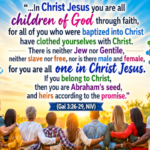
When we walk in a relationship with Christ, something remarkable happens. The Bible says that anyone in Christ becomes a new creation. Our identity is no longer defined by past failures, pain, or the opinions of others. My identity is rooted in God’s love. Because of that truth, I can say with confidence, “By the grace of God, I am what I am.” (1 Cor 15:10,) And through Christ, I am more than a conqueror. (Rom 8:37). “… to all who did receive him, to those who believed in his name, he gave the right to become children of God.” (John 1:12)
In the Bible, identity is not something you invent or earn, but something we may receive from God whenever we ask, and this truth is most clearly seen in Christ and Him crucified. The message of the cross shows that identity is not built on human effort or perceived worthiness, but on what Jesus has already accomplished through His death and resurrection. The Bible says in John 1:12, “to them that received Him gave He POWER to be the sons and daughters of God.” He gives us the power to either be or become the sons and daughter of God!
Through Christ and Him crucified, sin and shame no longer define a person; instead, those who believe are given a new identity grounded in grace, forgiveness, and reconciliation with God. This means identity is not fragile or dependent on performance, but secure because it rests on the finished work of Jesus. Rather than striving to prove who or what you are (God already knows, John 2:25), the gospel calls you to trust in Christ and receive what He has already secured, shaping your identity not around your past failure or achievements, but around His sacrifice and love. This is why God Himself calls us “sons and daughters of God.”
“I will be a Father to you, and you shall be My sons and daughters, says the Lord Almighty.” (2 Cor 6:18, MKJV)
Out of the World, Into God’s Family
“Those who come out of the world in spirit and in all practice may regard themselves as sons and daughters of God. They may believe His Word as a child believes every word of his parents. Every promise is sure to him that believes. Those who unite with the Father, the Son, and the Holy Spirit, who show by their lives that they are no longer following the course they followed before they united with these divine methods, will receive the wisdom from above. They will not depend on human wisdom. In order to deal righteously with the world, as members of the royal family, children of the heavenly King, Christians must feel their need of a power which comes only from the heavenly agencies who have pledged themselves to work in their behalf.” {6BC 1102.3}
“After we have formed a union with the great threefold power, we shall regard our duty toward the members of God’s family with a much more sacred awe than we have ever done before. This is a phase of religious reform that very few appreciate. Those who seek to answer the prayer, “Thy will be done in earth, as it is in heaven,” will seek by living pure, sanctified lives to show to the world how the will of God is done in heaven.” {6BC 1102.4}